


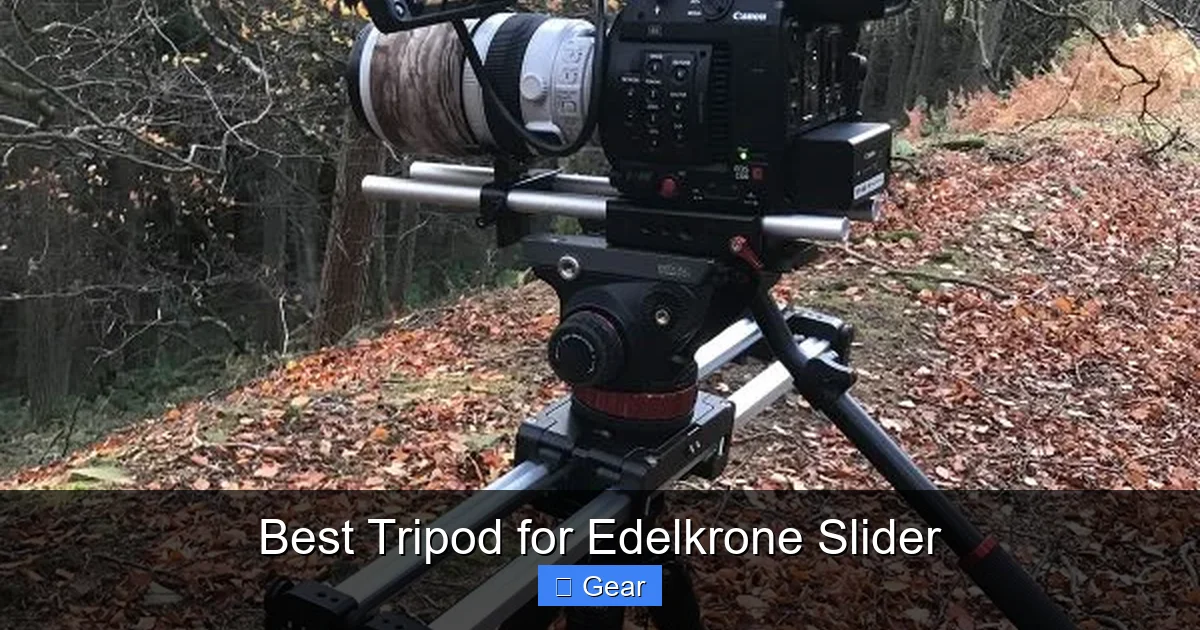
Choosing the best tripod for your Edelkrone slider is paramount for achieving professional, buttery-smooth cinematic shots. A robust, stable tripod with adequate payload capacity is crucial to prevent vibrations and ensure precise movements. Investing in a high-quality tripod guarantees your Edelkrone slider performs at its peak, transforming your video production.
So, you’ve invested in an Edelkrone slider. Congratulations! You’re now on your way to capturing those coveted, buttery-smooth cinematic movements that elevate any video project. Edelkrone’s engineering is top-notch, delivering incredible precision, quiet operation, and smart features that can truly transform your storytelling.
But here’s the often-overlooked secret to unlocking the full potential of your new gear: it’s not just about the slider itself. The unsung hero, the silent workhorse that truly dictates the quality of your slider shots, is your tripod. A fantastic Edelkrone slider paired with a flimsy tripod is like putting a Ferrari engine in a skateboard. It simply won’t perform as intended. In this comprehensive guide, we’re going to dive deep into everything you need to know to choose the absolute best tripod for your Edelkrone slider, ensuring every slide is as perfect as you envision it.
Key Takeaways
- Stability is Paramount: A weak tripod will introduce vibrations and unwanted movement, ruining your Edelkrone slider shots. Prioritize robust, rigid tripods.
- Payload Capacity Matters: Always calculate the combined weight of your Edelkrone slider, camera, lens, and any accessories. Your tripod’s payload must comfortably exceed this total.
- Bowl Heads for Easy Leveling: Video tripods with 75mm or 100mm bowl heads make leveling your slider quick and effortless, which is essential for smooth horizontal or inclined slides.
- Consider Two Tripods for Longer Sliders: For Edelkrone’s longer sliders (like Wing Pro or heavier setups), using two tripods provides superior stability and prevents sag, especially at the ends of the travel.
- Carbon Fiber vs. Aluminum: Carbon fiber offers excellent vibration dampening and lighter weight, ideal for portability, while aluminum is more budget-friendly and durable, though heavier.
- Leg Locks and Spreader Types: Twist locks are generally more durable and secure than flip locks, and a mid-level spreader enhances stability on uneven terrain compared to a ground-level spreader.
- Invest Wisely: Your tripod is the foundation of your camera setup. Skimping on this component will limit the potential of your sophisticated Edelkrone slider, making a good investment essential for quality results.
Quick Answers to Common Questions
What is the most important feature for a tripod supporting an Edelkrone slider?
The most important feature is payload capacity. Ensure the tripod can comfortably hold the combined weight of your Edelkrone slider, camera, lens, and all accessories, with a significant buffer.
Can I use a photography tripod with my Edelkrone slider?
You can, but it’s generally not recommended. Photography tripods often use ball heads which are difficult to level precisely for a slider, and their legs might not be designed for the dynamic, off-center loads a slider creates.
What is a “bowl head” tripod and why is it good for sliders?
A bowl head tripod features a hemispherical receiver that accepts a half-ball adapter. This design allows you to quickly and precisely level your Edelkrone slider by simply adjusting the adapter within the bowl, without needing to adjust each tripod leg individually.
Should I use one or two tripods for my Edelkrone slider?
For shorter or lighter Edelkrone sliders, one sturdy tripod might suffice. However, for longer Edelkrone sliders or heavier camera setups, using two identical tripods (one at each end) provides superior stability and prevents sag during movement.
What is a flat base adapter for a tripod?
A flat base adapter is an accessory that screws into a tripod’s bowl mount (e.g., 75mm or 100mm) and provides a flat platform with a standard 3/8″-16 screw. This allows you to securely mount accessories like an Edelkrone slider directly onto a bowl-equipped video tripod.
📑 Table of Contents
Why Your Tripod Matters for Edelkrone Sliders
You might think a tripod is just something to hold your camera steady. And for static shots, that’s largely true. But when you introduce movement, especially the precise, controlled movement of an Edelkrone slider, the demands on your tripod skyrocket. It’s no longer just about holding weight; it’s about managing dynamic loads, preventing micro-vibrations, and providing a stable platform across the entire range of motion.
The Weight Challenge: More Than Just Your Camera
When you place your camera on a tripod, it’s a fixed weight. Add an Edelkrone slider to the mix, and you’re adding significant extra mass. Most Edelkrone sliders, even the compact ones, are not feather-light. Then factor in your camera, lens, maybe a monitor, an external mic, and a battery pack. All of this weight is concentrated on your tripod. A tripod that struggles with this combined load will flex, wobble, and ultimately ruin your shot with unwanted movement.
Dynamic Loads and Lever Arms
A slider, by its very nature, creates a lever arm. As your camera moves from the center to the end of the Edelkrone slider, the weight distribution shifts. This creates increased torque and stress on the tripod head and legs. A flimsy tripod will visibly sag or even tip over as the weight moves to the extremes. Professional video tripods are designed to handle these dynamic, off-center loads with grace and stability.
Vibration: The Silent Killer of Smooth Shots
Even the slightest vibration can be disastrous for a slider shot. Wind, an uneven surface, or even the subtle movements of your hand operating the camera can transmit through a weak tripod into your shot. High-quality tripods, especially those made from carbon fiber, excel at dampening these vibrations, ensuring your footage remains tack-sharp and incredibly smooth. Your Edelkrone slider is designed to be smooth; don’t let your tripod negate that engineering masterpiece.
Key Features to Look for in a Tripod for Edelkrone Sliders
Now that we understand why a good tripod is critical, let’s break down the specific features you should prioritize when making your selection. This isn’t just about finding any tripod; it’s about finding the right tripod for your Edelkrone slider.
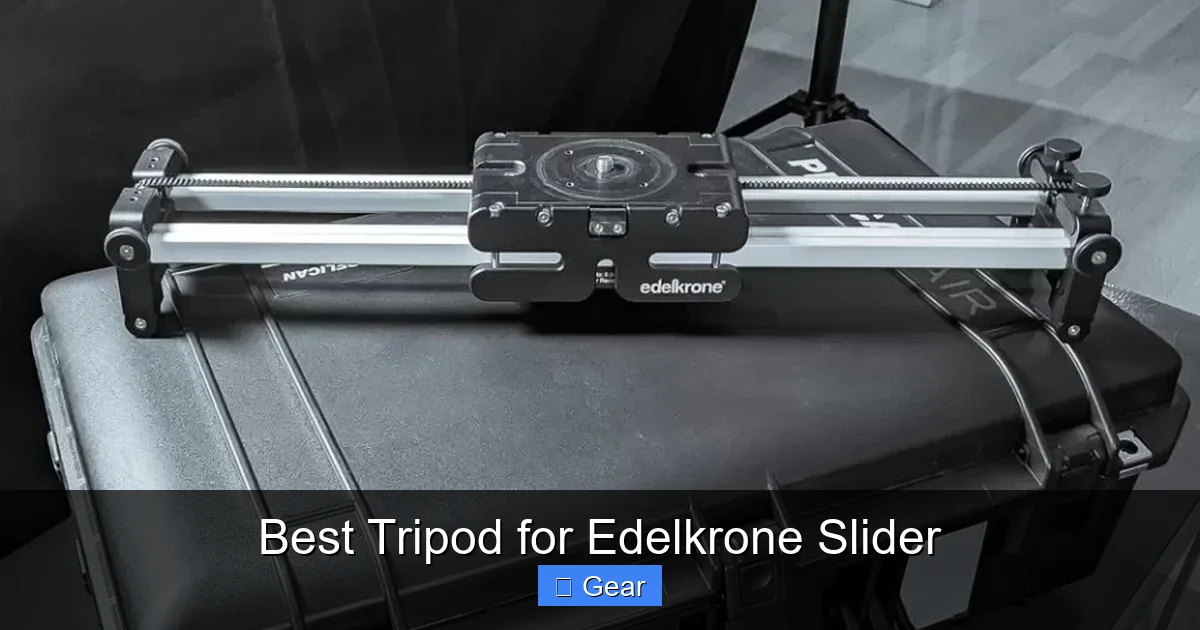
Visual guide about Best Tripod for Edelkrone Slider
Image source: pixelthick.com
1. Payload Capacity: Don’t Underestimate It!
This is arguably the most crucial specification. Calculate the total weight of your Edelkrone slider, your heaviest camera setup (camera body + heaviest lens + battery + monitor + any other accessories). Then, look for a tripod with a payload capacity that is at least 1.5 to 2 times this total weight. This buffer ensures maximum stability and longevity, even when dealing with dynamic loads. For example, if your total setup is 10 lbs, look for a tripod rated for 15-20 lbs or more.
2. Leg Section Count and Material: Stability vs. Portability
- Leg Sections: Tripods usually have 2, 3, or 4 leg sections. Fewer sections generally mean thicker legs and greater stability but less compact folded size. More sections mean greater portability but potentially less rigidity. For an Edelkrone slider, 2 or 3 sections are often preferred for maximum stability.
- Material:
- Aluminum: Heavier, very durable, and generally more affordable. Good for studios or situations where weight isn’t a primary concern. It can transmit more vibration than carbon fiber.
- Carbon Fiber: Lighter, excellent at dampening vibrations, and stronger relative to its weight. This makes it ideal for field productions or when you need to carry your Edelkrone slider setup long distances. It comes at a higher price point.
3. Head Compatibility: Flat Base vs. Bowl Head
Most Edelkrone sliders, like the SliderONE, SliderPLUS, or Wing PRO, are designed to mount on a flat base (with a 3/8″-16 screw). However, attaching them to a video tripod with a bowl mount system is often superior because of the ease of leveling.
- Flat Base: If your tripod head has a flat base, you can directly mount your Edelkrone slider. However, leveling the slider precisely can be a tedious process of adjusting each leg individually, which is a pain, especially on uneven terrain.
- Bowl Head (75mm or 100mm): This is the gold standard for video work. A bowl head allows you to quickly level your camera (or Edelkrone slider) by simply loosening the bowl, adjusting the angle, and tightening it again, all without touching the legs. You will need a flat base adapter (sometimes called a half ball adapter) that screws into the bowl mount and provides a flat platform with a 3/8″-16 screw for your slider. This setup offers the best of both worlds: quick leveling and rock-solid stability.
4. Spreader Type: Enhanced Stability
A spreader connects the tripod legs, adding stability and preventing them from splaying outwards.
- Mid-Level Spreader: Connects the legs closer to the middle. Excellent for stability on uneven ground and allows for independent leg angle adjustments. This is often preferred for dynamic outdoor shooting with an Edelkrone slider.
- Ground-Level Spreader: Sits at the bottom, connecting the feet. Good for studio floors or very flat surfaces. Can sometimes get in the way on rough terrain.
5. Leg Locks: Speed and Security
- Twist Locks: You twist a collar to lock/unlock sections. Generally considered more durable, less prone to catching, and offer a very secure lock.
- Flip Locks: You flip a lever to lock/unlock sections. Faster to deploy for some users, but can sometimes become loose over time and might pinch fingers if not careful. Choose based on personal preference, but ensure they are robust and made of quality materials.
6. Height and Portability
Consider your typical shooting scenarios. Do you need to shoot low angles? High angles? Will you be carrying your Edelkrone slider and tripod long distances? Ensure the tripod can reach your desired minimum and maximum heights comfortably. For portability, check the folded length and weight.
Recommended Tripod Brands and Models for Edelkrone Sliders
While specific models change, certain brands consistently deliver high-quality video tripods perfect for supporting an Edelkrone slider. Here are some trusted names and types to look for:
Professional-Grade (Excellent Investment)
- Manfrotto: A very popular choice. Look at their professional video tripods, especially the Manfrotto 504X, 509X, or 608 series heads paired with their twin-leg tripods (e.g., MVTTWINMA or MVTTWINFA). These are robust, stable, and widely available. Their fluid heads are fantastic for pan and tilt, and their legs can handle significant weight.
- Sachtler: Known for broadcast-quality gear. The Sachtler Ace M, Ace L, or Ace XL series with Flowtech legs (e.g., Flowtech 75) are exceptional. Flowtech legs offer incredibly fast deployment and rock-solid stability, perfect for quick setups with your Edelkrone slider. This is a premium option, but the return in quality and ease of use is immense.
- Benro: Offers excellent value for professional features. The Benro S-series video heads (like the S6PRO or S8PRO) combined with their aluminum or carbon fiber twin-leg tripods (e.g., A3573F / C3573F legs) are highly regarded. They provide great stability and smooth head movement without breaking the bank as much as Sachtler.
Mid-Range (Great Balance of Price & Performance)
- SmallRig: They’ve been expanding into more robust video tripods. Look for their heavier-duty options designed for video, often offering good payload capacity and sturdy builds at competitive prices. Always check user reviews for specific models.
- Sirui: Sirui often produces very good quality at a reasonable price point. Their ST and P-series tripods with accompanying fluid heads can be a solid choice for lighter Edelkrone slider setups.
Considerations for Photography Tripods
While some high-end photography tripods (like Gitzo Mountaineer series) can be incredibly stable and feature good carbon fiber construction, they typically come with ball heads. If you go this route, you’ll definitely need to swap out the ball head for a dedicated video fluid head (e.g., Manfrotto 500 series) that offers smooth pan/tilt and a flat base adapter for your Edelkrone slider. Be mindful of the payload of the legs themselves.
Setting Up Your Edelkrone Slider on a Tripod: Practical Tips
Once you have your ideal tripod, proper setup is crucial for maximizing the performance of your Edelkrone slider.
1. Centering the Load
Always try to center the Edelkrone slider as much as possible over the tripod head. While Edelkrone sliders are designed to distribute weight, keeping the center of gravity over the tripod helps maintain stability, especially if you’re using a single tripod for a longer slider.
2. Using Two Tripods (for Longer or Heavier Sliders)
For Edelkrone sliders like the SliderPLUS Medium/Long, Wing PRO with heavy setups, or JibONE, a single tripod can sometimes lead to sag or instability at the ends of the slider’s travel. Using two identical, sturdy tripods (one at each end) is often the best solution. This distributes the weight more evenly, eliminates sag, and provides unparalleled stability for those long, sweeping shots.
3. Leveling Your Slider
This is where a bowl head tripod truly shines.
- Mount your flat base adapter into the bowl mount.
- Mount your Edelkrone slider onto the flat base adapter.
- Place a bubble level (many sliders have one, or use a hot shoe level) on the slider carriage.
- Loosen the bowl’s lock, adjust the adapter until the bubble is perfectly centered, and then tighten the bowl lock securely.
This process is much faster and more accurate than adjusting each leg individually.
4. Securing the Slider
Ensure your Edelkrone slider is tightly screwed onto the tripod’s mounting plate or flat base adapter. Any looseness here will translate directly into wobbly footage.
5. Counterbalancing (If Applicable)
Some Edelkrone sliders (especially those designed for vertical movement or jibs) may benefit from counterweights. Always follow Edelkrone’s recommendations for counterbalancing to achieve the smoothest, most stable operation.
Maintenance and Care
Your tripod is an investment. Keep it clean, especially the leg locks and sliding mechanisms, to prevent grit and grime from affecting its operation. Periodically check all screws and bolts for tightness. A well-maintained tripod will serve your Edelkrone slider for many years to come.
Conclusion
Your Edelkrone slider is a precision instrument designed to deliver stunning cinematic motion. To truly unlock its potential and ensure your shots are always smooth, stable, and professional, you absolutely need to pair it with a high-quality tripod. Don’t let a shaky foundation undermine your creative vision.
By understanding the critical features like payload capacity, leg material, and head type, you can make an informed decision. Investing in a robust video tripod that comfortably handles the combined weight of your Edelkrone slider and camera setup will not only save you from frustrating reshoots but will also elevate the overall production value of your work. Choose wisely, set up correctly, and get ready to create some truly breathtaking cinematic magic!
🎥 Related Video: The Best Tripod for Edelkrone System [ SliderPlus V5, HeadOne, Motion Control Module, etc. ]
📺 Hyph Tech
Proaim CST-100 Tripod: https://bhpho.to/37SxTfL Manfrotto 500BALL 100mm: https://bhpho.to/2VPm1rM The Hyphenate reviews …
Frequently Asked Questions
How much payload capacity do I really need for my Edelkrone slider?
You should calculate the total weight of your Edelkrone slider, camera, heaviest lens, and any accessories like monitors or batteries. Then, aim for a tripod with a payload capacity that is at least 1.5 to 2 times this total weight for optimal stability and safety.
Is carbon fiber or aluminum better for a tripod with an Edelkrone slider?
Carbon fiber is generally better because it’s lighter and excels at dampening vibrations, which is crucial for smooth slider shots. However, aluminum tripods are more budget-friendly and durable, making them a good option if weight and vibration dampening are less critical for your specific use case.
What’s the best way to level my Edelkrone slider on a tripod?
The best way to level your Edelkrone slider is by using a tripod with a bowl head (75mm or 100mm) and a flat base adapter. Mount your slider on the adapter, then use the bowl mechanism to quickly and precisely level the slider with a bubble level before tightening.
Can a budget tripod work for an Edelkrone slider?
While a budget tripod might technically hold your Edelkrone slider, it will likely compromise stability and introduce vibrations, negating the smooth motion the slider is designed to provide. Investing in a quality tripod is crucial for achieving professional results with your Edelkrone slider.
Do Edelkrone sliders come with specific tripod recommendations?
Edelkrone generally recommends using a robust video tripod that matches the payload requirements of your specific slider model and camera setup. While they don’t endorse specific brands, the principles of stability, payload, and easy leveling (via a bowl head) remain universal for their products.
What if my Edelkrone slider sags in the middle when mounted on one tripod?
If your Edelkrone slider sags in the middle, it’s a clear sign that your tripod isn’t providing adequate support, especially for dynamic loads. The best solution is to use two identical, sturdy video tripods, one placed at each end of the Edelkrone slider, to evenly distribute the weight and eliminate sag.
