


Capturing your skateboarding journey requires a camera as robust and dynamic as your riding. This guide dives into the top contenders for the best skateboard cameras, highlighting essential features like durability, wide-angle lenses, and high frame rates that are crucial for crystal-clear slow-motion footage. We’ll explore leading brands like GoPro, DJI, and Insta360, providing practical advice on mounting techniques and editing to help you produce breathtaking skate videos that truly stand out.
Hey there, fellow shredders and content creators! Ever landed that perfect kickflip or cruised through an epic spot, only to wish you had captured every glorious second of it? In today’s world, sharing your passion for skateboarding has never been easier, and having the right gear is key to making your footage pop. Whether you’re aiming to document your progress, create a sick highlight reel, or inspire others with your style, a dedicated skateboard camera is an absolute game-changer.
Gone are the days of bulky camcorders and complicated setups. Modern action cameras are compact, incredibly durable, and packed with features designed for high-octane activities like skateboarding. But with so many options out there, how do you choose the best skateboard cameras for your needs? Don’t sweat it! We’re here to break down everything you need to know, guiding you through the essential features, top contenders, and pro tips to help you capture your skate sessions like a boss.
Key Takeaways
- Durability is Key: Skateboarding is tough on gear. The best cameras for skating are built to withstand impacts, dust, and water, often without needing extra cases.
- Wide-Angle Lenses are Essential: A wide field of view (FOV) captures more of the action and environment, giving your footage that classic skate video look, often with a fisheye effect.
- High Frame Rates for Slow Motion: Look for cameras capable of 120fps or 240fps at 1080p or even 4K. This allows for smooth, dramatic slow-motion playback of tricks.
- Effective Image Stabilization: Skateboarding involves a lot of motion. Excellent electronic or optical image stabilization (EIS/OIS) is crucial for smooth, watchable footage, especially from board or helmet mounts.
- Versatile Mounting Options: A good skateboard camera should offer a wide range of mounting solutions – from board and helmet mounts to chest and handheld options – to capture diverse perspectives.
- Battery Life and Storage: Ensure the camera has sufficient battery life for your sessions and supports large, fast microSD cards for capturing extensive high-resolution footage.
Quick Answers to Common Questions
Which GoPro is best for skateboarding?
The GoPro Hero 12 Black is currently considered the best, offering top-tier stabilization (HyperSmooth 6.0), high resolutions (5.3K60, 4K120), and excellent low-light performance with its Enduro battery.
Do I need a fisheye lens for skate videos?
While not strictly necessary, a wide-angle or fisheye lens is highly recommended as it provides the classic, immersive skate video look by capturing more of the action and environment.
How important is image stabilization for a skateboard camera?
Image stabilization is extremely important. Skateboarding involves constant movement and vibrations, so strong electronic or optical stabilization (like GoPro’s HyperSmooth or DJI’s RockSteady) is crucial for smooth, watchable footage.
Can I use my phone to film skateboarding?
You can, but it’s not ideal. Phones lack the durability, wide-angle lens, high frame rates for slow motion, and versatile mounting options that dedicated action cameras offer, making them prone to damage and less suitable for dynamic skate footage.
What is the ideal frame rate for slow-motion skate footage?
For buttery-smooth slow motion, aim for cameras that can record at least 120 frames per second (fps) at 1080p, or ideally 240fps at 1080p. Higher frame rates provide more flexibility in post-production to slow down clips without choppiness.
📑 Table of Contents
Why a Dedicated Skateboard Camera is Essential
You might be thinking, “Can’t I just use my phone?” While smartphones have incredible cameras these days, they’re simply not built for the abuse and specific demands of skateboarding. A specialized action camera offers a suite of advantages that make it indispensable for serious skate videography.
Durability Beyond Compare
Skateboarding is rough. Falls happen, boards fly, and concrete is unforgiving. A regular phone or DSLR would likely meet an untimely end during its first close encounter with the pavement. Dedicated action cameras, however, are designed with ruggedness in mind. They’re often waterproof, dustproof, and shock-resistant right out of the box, meaning they can take a tumble and keep on filming. This peace of mind allows you to focus on landing your tricks, not worrying about your gear.
Wide-Angle Magic and Immersive POV
The iconic look of skate videos often comes from their wide-angle perspective. Action cameras typically feature ultra-wide lenses that capture a vast field of view, making the action feel more immersive and dynamic. This is crucial for showing off the full scope of a trick, the environment of a spot, or the speed of a line. Many also offer a “fisheye” effect, which is a classic staple in skate videography, giving that signature rounded, expansive look.
High Frame Rates for Epic Slow Motion
There’s nothing quite like watching a difficult trick unfold in buttery-smooth slow motion. Action cameras excel at this, offering high frame rates like 120 frames per second (fps) or even 240fps at resolutions like 1080p or 4K. This allows you to stretch out fleeting moments, highlighting the precision, effort, and style that goes into every flick and grind. It’s an invaluable tool for analyzing your own technique or simply creating stunning visual content.
Versatile Mounting Options
From the nose of your board to the brim of your helmet, action cameras come with an array of mounting options that open up a world of creative perspectives. You can capture unique point-of-view (POV) shots that immerse viewers directly into the action, or mount the camera on an object to get stable, dynamic tracking shots. This versatility is something no other camera type can easily match, making these the best skateboard cameras for diverse angles.
Key Features to Look For in a Skateboard Camera
When you’re sifting through the options, certain features will make a huge difference in the quality and usability of your skate footage. Let’s dive into what truly matters.
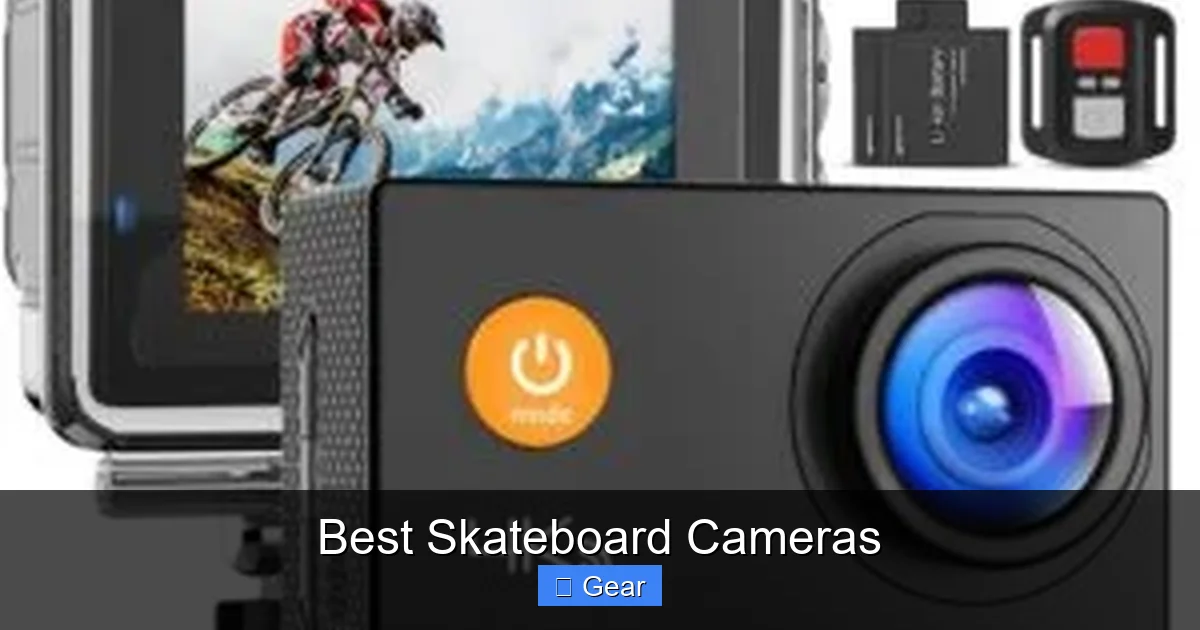
Visual guide about Best Skateboard Cameras
Image source: bestsportstuff.com
Robustness and Waterproofing
As mentioned, durability is paramount. Look for cameras that boast strong construction and ideally come with waterproofing without needing an extra housing. This protects against unexpected spills, dust, and general wear and tear from skateboarding. Check for ratings like IPX7 or IPX8.
Video Resolution and Frame Rates
While 4K resolution is becoming standard, pay close attention to the frame rates offered at different resolutions.
- 4K (Ultra HD): Offers incredible detail. Look for 4K at 60fps for smooth standard footage, or even 120fps on higher-end models for slow motion.
- 1080p (Full HD): Still excellent for sharing online. Aim for 1080p at 120fps or 240fps for the best slow-motion capabilities.
Higher frame rates give you more flexibility in post-production to slow down your clips without choppiness.
Field of View (FOV) and Lens Type
A wide FOV is non-negotiable for skateboarding. Most action cameras offer various FOV settings (e.g., SuperView, Wide, Linear, Narrow). The wider, the better for capturing the scale of tricks and spots. Some cameras also offer a digital lens option that mimics the classic fisheye look, which many skateboarders love.
Image Stabilization (EIS/OIS)
Skateboarding is inherently shaky. Advanced image stabilization is crucial for smooth, professional-looking footage, especially when the camera is mounted directly on your board or helmet. Look for features like GoPro’s HyperSmooth, DJI’s RockSteady, or Insta360’s FlowState. These technologies digitally or optically correct for bumps and vibrations, making your videos much more watchable.
Battery Life and Storage
You don’t want your camera dying mid-session. Look for models with decent battery life (at least 1-2 hours of continuous 4K recording) or the option to easily swap out batteries. For storage, ensure the camera supports high-capacity (e.g., 128GB, 256GB) and fast (UHS-I Speed Class 3/V30) microSD cards to handle large 4K files and ensure smooth recording.
Mounting Options and Accessories
The versatility of a camera often comes down to its mounting ecosystem. GoPro arguably has the largest and most varied accessory range, but other brands are catching up. Think about where you want to mount your camera: on your board, helmet, chest, or a stick. Make sure the camera you choose has compatible mounts available.
Ease of Use and Connectivity
You want to spend more time skating and less time fiddling with settings. Look for intuitive menus, quick-capture modes, and reliable smartphone apps for remote control and easy footage transfer. Wi-Fi and Bluetooth connectivity are standard and helpful for quick sharing.
Audio Quality
While often secondary to video for skate edits, decent audio can enhance your clips. Some cameras have good built-in microphones, while others offer external mic support. For raw sound like board clatter or tire roll, internal mics are usually fine, but for voiceovers or specific sound design, an external mic can be beneficial.
Top Contenders for the Best Skateboard Cameras
Now that we know what to look for, let’s explore the leading action cameras that dominate the skateboarding scene. These are the current heavyweights vying for the title of the best skateboard cameras.
GoPro Hero Series (Hero 12 Black, Hero 11 Black)
GoPro has long been the king of action cameras, and for good reason. Their Hero series cameras are incredibly rugged, compact, and packed with features perfect for skateboarding.
- Hero 12 Black: The latest flagship, boasting incredible HyperSmooth 6.0 stabilization, 5.3K video at 60fps, 4K at 120fps, and even 2.7K at 240fps for insane slow motion. It also introduces GP-Log for more professional color grading and a longer battery life thanks to its Enduro battery.
- Hero 11 Black: Still a powerhouse, offering many of the Hero 12’s core features like 5.3K60 and 4K120, excellent stabilization (HyperSmooth 5.0), and a larger 8:7 sensor that’s great for cropping vertical video for social media.
GoPro’s robust ecosystem of mounts means you’ll find a solution for almost any shot. They are truly among the best skateboard cameras for all-around performance and reliability.
DJI Osmo Action Series (Osmo Action 4, Osmo Action 3)
DJI has emerged as a strong competitor to GoPro, offering cameras with fantastic image quality and stabilization. The Osmo Action series is known for its magnetic quick-release mounting system, which is incredibly convenient.
- Osmo Action 4: Features a larger 1/1.3-inch sensor for excellent low-light performance, 4K at 120fps, and DJI’s RockSteady 3.0+ stabilization. It also boasts incredible battery life and fast charging. Its dual touchscreens (front and back) are a huge plus for framing shots.
- Osmo Action 3: A more budget-friendly option that still delivers 4K at 120fps and robust RockSteady 3.0 stabilization. It shares the same convenient magnetic mount as the Action 4.
These cameras are fantastic alternatives, especially if you value ease of use and superior low-light capabilities.
Insta360 Cameras (Insta360 X3, Insta360 ONE RS)
Insta360 offers a different kind of action camera experience, particularly with their 360-degree cameras. These open up unique creative possibilities for skateboarding.
- Insta360 X3: A pocket-sized 360 camera that captures everything around you in 5.7K. The magic here is “reframing” in post-production, where you can choose your favorite angles and perspectives *after* you’ve filmed. It also features “invisible selfie stick” technology, making it look like your camera is floating. Its FlowState stabilization is excellent.
- Insta360 ONE RS (1-inch 360 Edition / 4K Boost Lens): A modular camera system. You can swap out lenses – use the 1-inch 360 Edition for incredible low-light 360 footage, or the 4K Boost Lens for a more traditional action camera experience with a larger sensor and 4K at 60fps.
While the 360 cameras require a bit more editing, the ability to capture every angle and reframe your shots means you’ll never miss a trick. They are truly innovative options for creative skate videography, making them some of the best skateboard cameras for unique perspectives.
Mounting Techniques & Creative Shots
Having a great camera is only half the battle; knowing how to mount it for dynamic shots is crucial. Experimentation is key!
Board Mounts
Attaching your camera directly to your skateboard offers incredibly immersive perspectives.
- Nose/Tail Mount: Provides a “rider’s eye” view looking forward or backward, capturing your feet and the ground rolling by.
- Truck Mount: Get super low-to-the-ground shots, emphasizing speed and grind action. Be careful not to obstruct the trucks’ function.
- Under the Board Mount: With specialized mounts, you can capture unique angles looking up at your board or feet, especially during flips.
Remember that board mounts will experience the most vibration, making good image stabilization absolutely critical.
Personal POV Mounts
These mounts put the viewer directly into your shoes (or helmet!).
- Helmet Mount: Offers a stable and consistent POV, capturing your line of sight. Front mounts are common, but side or top mounts can provide different feels.
- Chest Mount: A classic for action sports, it shows more of your hands, arms, and the board, giving a wider sense of your movement.
- Mouth Mount: For the most immersive, hands-free POV, a mouth mount places the camera directly at your eye level.
External & Follow Cam Shots
These shots require a second person or clever use of tripods/gimbals.
- Handheld Follow Cam: Someone skating or running alongside you, holding the camera low, creates dynamic tracking shots.
- Pole/Selfie Stick: Extend your reach for unique angles, particularly useful with 360 cameras for the “invisible selfie stick” effect.
- Static Shot: Place the camera on a tripod or mount it to a fixed object (e.g., a rail, ledge, or curb) to capture a trick within its environment.
Editing Tips for Your Skateboard Footage
Once you’ve captured your epic footage, the magic happens in the edit. Even raw clips from the best skateboard cameras can be transformed with a few editing touches.
Choosing the Right Software
There’s a range of editing software to suit all skill levels and budgets:
- Beginner-Friendly: Quik (GoPro’s app), CapCut, InShot (mobile apps) or DaVinci Resolve (free desktop software with pro features).
- Intermediate/Pro: Adobe Premiere Pro, Final Cut Pro (Mac), DaVinci Resolve Studio (paid version).
Start simple and gradually explore more advanced features as you get comfortable.
Highlighting Tricks with Slow Motion
This is where those high frame rates pay off. Identify the peak action of your trick and slow it down dramatically. Often, speeding up the approach and landing, then slowing down just the trick itself, creates a powerful effect.
Adding Music and Sound Design
Music can completely change the vibe of your video. Choose tracks that match your style and the energy of your skating. Don’t forget sound effects! The natural sounds of skateboarding (board hitting pavement, grinding, popping) can be enhanced or layered to add impact. Royalty-free music libraries are your friend here.
Color Grading and Correction
Adjusting colors can make your footage look more cinematic and consistent. Basics include adjusting exposure, contrast, saturation, and white balance. Many cameras offer “flat” color profiles (like GoPro’s Protune) that preserve more detail for professional color grading.
Crafting a Narrative
Even short skate clips can tell a story. Think about opening and closing shots, linking tricks with smooth transitions, and building anticipation. Don’t just string clips together; aim for a flow that keeps viewers engaged.
Conclusion: Capture Your Skateboarding Legacy
Choosing the best skateboard cameras for your needs is an investment in your passion. It’s about more than just getting footage; it’s about documenting your progress, celebrating your achievements, and sharing the sheer joy of skateboarding with the world. Whether you opt for the legendary durability of a GoPro, the innovative stabilization of a DJI, or the unique perspectives of an Insta360, you’re equipping yourself to capture every ollie, grind, and kickflip in stunning detail.
Remember, the best camera is the one you actually use. So, get out there, experiment with angles, push your limits, and don’t forget to hit record. Your skateboarding story is waiting to be told, and with the right camera in hand, you’ll be ready to tell it to the fullest. Now go forth and create some epic skate films!
🎥 Related Video: This Might be The Best Camera For Skateboarding in 2026 [Xtra Sphra 360 Camera]
📺 Lamont Holt
I’ve been testing out the Xtra Sphra360 and it’s honestly a game changer for filming skating. Being able to capture everything in …
Frequently Asked Questions
What are the most crucial features for a skateboard camera?
The most crucial features are extreme durability and waterproofing to withstand impacts, a wide-angle lens for immersive shots, high frame rates (120-240fps) for smooth slow motion, and advanced image stabilization to counteract vibrations from the board.
How does a 360 camera benefit skate videography?
A 360 camera like the Insta360 X3 allows you to capture every angle around you simultaneously. This means you can reframe your shots in post-production, ensuring you never miss a trick and opening up incredibly creative, dynamic camera movements that aren’t possible with traditional cameras.
Are older GoPro models still good for skateboarding?
Yes, older GoPro models like the Hero 8, 9, or 10 Black are still excellent choices for skateboarding, especially if you’re on a budget. They still offer great stabilization, high frame rates, and wide-angle capabilities, providing fantastic value for capturing skate footage.
What kind of memory card do I need for high-resolution skate videos?
You’ll need a high-capacity (e.g., 128GB or 256GB) and high-speed microSD card. Look for cards rated as UHS-I Speed Class 3 (U3) or V30, as these have the read/write speeds necessary to handle large 4K files and continuous high frame rate recording without dropping frames.
Should I prioritize 4K resolution or higher frame rates?
For skateboarding, prioritizing higher frame rates (e.g., 1080p at 240fps or 4K at 120fps) is generally more beneficial than raw 4K resolution at lower frame rates. Smooth slow motion makes tricks look epic and is often more impactful than slightly higher detail that might be lost in fast-moving action or online compression.
How can I protect my camera when mounting it to my board?
Even with durable cameras, direct board mounts are high-risk. Use strong, reliable adhesive mounts (like those provided by GoPro/DJI), and consider adding a leash or tether from the camera to the board as a backup. Always check that mounts are securely fastened before each session, and avoid mounting in high-impact areas if possible.
