


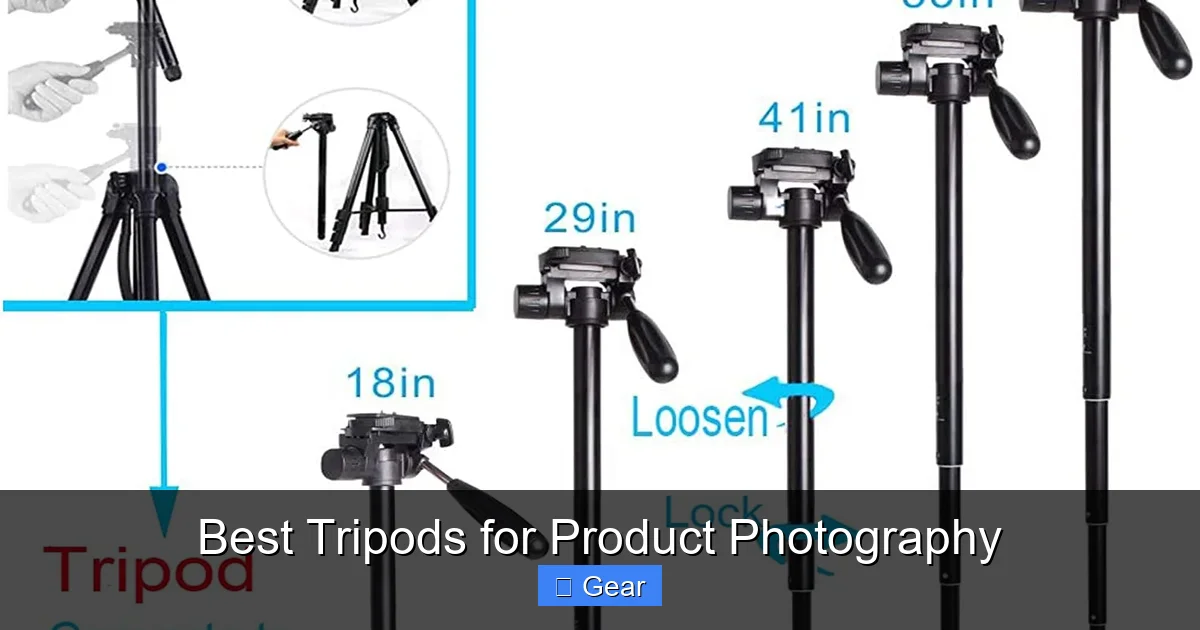
A reliable tripod is not just an accessory; it’s a fundamental tool for any product photographer seeking sharp, consistent, and professional results. Choosing the best tripods for product photography involves considering crucial factors like stability, head type, and vertical/horizontal reach to suit your specific shooting needs. From ensuring tack-sharp images even in low light to enabling precise focus stacking and perfect shot-to-shot consistency, investing in the right tripod will dramatically enhance the quality and efficiency of your product photography workflow, making it an indispensable part of your gear arsenal.
Ever wondered how product photographers achieve those incredibly sharp, perfectly framed shots that make products pop online? While a great camera and lens are essential, there’s one unsung hero often overlooked by beginners: the tripod. For product photography, a tripod isn’t just a nice-to-have accessory; it’s an absolutely non-negotiable piece of gear that forms the backbone of your entire setup.
Think about it: tiny movements, even the most imperceptible hand tremors, can introduce blur into your photos, especially when shooting at slower shutter speeds or narrow apertures. In product photography, where details matter, and every pixel needs to be pristine, even the slightest blur can cost you sales. That’s where a high-quality tripod comes in, locking your camera down with rock-solid stability, ensuring every shot is crisp, clear, and professional. But with so many options out there, how do you choose the best tripods for product photography? Don’t worry, my friend; we’re about to break it all down for you.
In this comprehensive guide, we’ll dive deep into why a tripod is so crucial, the key features to look for, specific recommendations tailored to different needs, and practical tips to get the most out out of your setup. Whether you’re just starting your product photography journey or looking to upgrade your existing gear, understanding the nuances of choosing the right support system will be a game-changer for your workflow and the quality of your images. Let’s find the best tripods for product photography that will elevate your work!
Key Takeaways
- Stability is Paramount: The primary function of a tripod in product photography is to eliminate camera shake, ensuring tack-sharp images even with long exposures or narrow apertures.
- Head Type Matters Greatly: While ball heads offer flexibility, geared heads or 3-way pan-tilt heads provide much finer, independent control over camera movement, crucial for precise framing in product shots.
- Consider Vertical & Horizontal Reach: Look for tripods with a multi-angle or horizontal center column, or even dedicated boom arms, to achieve overhead shots or difficult angles without moving your product setup.
- Weight Capacity is Non-Negotiable: Always choose a tripod with a weight capacity significantly higher than your heaviest camera and lens combination to guarantee stability and prevent accidental tipping.
- Enhance Workflow & Consistency: A tripod allows for consistent framing, easy focus stacking, and repeatable shots, which is invaluable for e-commerce and catalog photography where consistency across multiple products is key.
- Don’t Skimp on Quality: Investing in a well-built tripod made from quality materials (like aluminum or carbon fiber) will provide long-term reliability and better performance, making it a wise investment for your business.
Quick Answers to Common Questions
What is the most important feature of a tripod for product photography?
The most important feature is stability. A tripod must be rock-solid to eliminate camera shake and ensure tack-sharp images, which is paramount for detailed product shots.
Are ball heads good for product photography?
While usable, ball heads are generally not ideal for product photography due to their lack of precise, independent control. Geared heads or 3-way pan-tilt heads offer much finer adjustments needed for exact framing.
Can I use my travel tripod for product photography?
You can, but it’s often not ideal. Travel tripods prioritize portability and light weight over maximum stability and features like horizontal center columns, which are crucial for many product photography setups.
What is a horizontal center column used for?
A horizontal center column allows your camera to extend outwards and directly over the product, enabling perfect top-down or flat-lay product shots without needing a separate boom arm.
Why is weight capacity so important for a tripod?
Weight capacity ensures the tripod can safely and stably support your camera and lens without wobbling or tipping. Always choose a tripod with a capacity significantly higher than your gear’s combined weight for optimal performance.
📑 Table of Contents
- Why a Tripod is Non-Negotiable for Product Photography
- Key Features to Look For in a Product Photography Tripod
- Top Tripod Recommendations for Product Photography (Categorized)
- Optimizing Your Tripod Setup for Product Shots
- Common Mistakes to Avoid When Choosing Tripods for Product Photography
- Conclusion
Why a Tripod is Non-Negotiable for Product Photography
Before we even discuss specific models, let’s understand why a tripod is such a fundamental tool. It’s about more than just holding your camera; it’s about control, consistency, and professional results.
Unrivaled Sharpness and Stability
This is the most obvious, yet most critical, benefit. Product photography often requires deep depth of field to keep the entire product in focus, which means shooting at narrow apertures (like f/8 to f/16). These apertures require more light, often leading to slower shutter speeds. Any camera movement during a slow shutter speed will result in blur. A tripod eliminates this movement entirely, giving you consistently sharp images, even when working with intricate details or in lower light conditions. This stability is the cornerstone of producing the best tripods for product photography results.
Consistent Framing and Angles
Imagine shooting a series of products for an e-commerce website. You need every product shot from the exact same angle, with the same composition. Trying to handhold for this level of precision is virtually impossible. With a tripod, once you’ve set your frame, it stays put. This consistency is invaluable for creating a professional, cohesive look across your product catalog, saving you immense time in post-production trying to align images.
Precision for Focus Stacking and Bracketing
For products with significant depth, achieving edge-to-edge sharpness can be challenging, even with narrow apertures. This is where techniques like focus stacking come in. You take multiple photos, each focused on a different part of the product, and then blend them in post-production. This requires absolute camera stillness between shots. Similarly, for exposure bracketing or complex lighting setups, a stable tripod ensures only the variables you’re changing (focus, exposure, light) are affected, not the camera position.
Enables Creative Lighting Techniques
With your camera locked down, you’re free to experiment with more advanced lighting techniques. Want to do some light painting? No problem. Need to use continuous lights that aren’t super bright, requiring longer exposures? A tripod has your back. It allows you to focus on shaping light and perfecting your setup without worrying about camera shake.
Improved Workflow and Efficiency
While it might seem slower at first, using a tripod actually speeds up your workflow in the long run. Once your camera is precisely positioned, you can focus on adjusting the product, lighting, and styling without constantly readjusting your camera. It creates a methodical approach, reducing errors and ensuring that you nail the shot every time, making it one of the core aspects of using the best tripods for product photography.
Key Features to Look For in a Product Photography Tripod
Not all tripods are created equal, especially when it comes to the specific demands of product photography. Here’s what you should prioritize when looking for the best tripods for product photography:
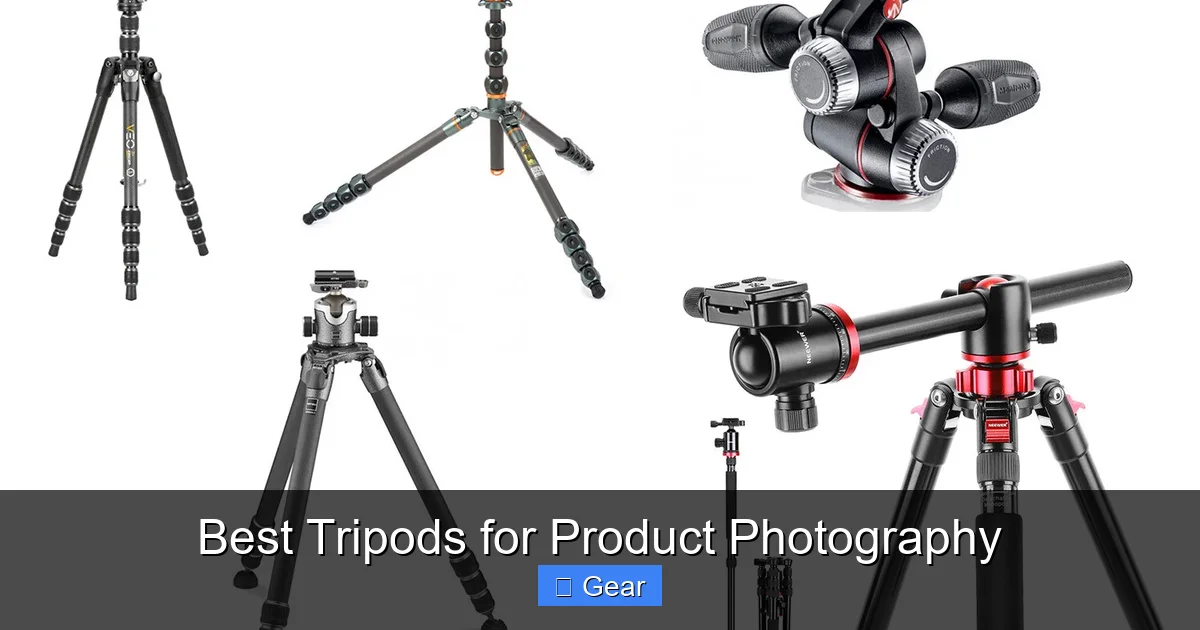
Visual guide about Best Tripods for Product Photography
Image source: digital-photography-school.com
Unwavering Stability and Build Quality
This is the absolute top priority. Look for a tripod that feels solid and doesn’t wobble when extended. Heavy-duty aluminum offers great stability at a lower price point, while carbon fiber is lighter and excellent at dampening vibrations, though more expensive. Always check the maximum load capacity and ensure it’s significantly higher (at least 2-3 times) than the weight of your heaviest camera and lens combination. Underspecifying here is a common and costly mistake.
The Right Head for Precision Control
The tripod head is arguably as important as the legs themselves. For product photography, precision is key.
- Ball Heads: While popular for their speed and flexibility, ball heads can be frustratingly imprecise for small adjustments. You unlock a single knob, and the camera can move in all directions.
- 3-Way Pan-Tilt Heads: These heads offer independent control over three axes (pan, tilt, and portrait/landscape orientation). This means you can adjust your horizontal angle without affecting your vertical tilt, and vice-versa. This independent control is incredibly useful for fine-tuning composition.
- Geared Heads: The gold standard for ultimate precision in a studio. Geared heads use precise gears for tiny, incremental adjustments along each axis. They are slower to set up initially but offer unparalleled control, making them ideal for macro work, architectural photography, and, of course, product photography. Many professionals consider geared heads to be among the best tripods for product photography setups.
Versatile Center Column and Height
Product photography often requires unique angles, including overhead shots. Look for a tripod with a versatile center column:
- Standard Center Column: Many tripods have a simple up-and-down center column. This is fine for eye-level shots.
- Horizontal or Multi-Angle Center Column: This is a game-changer for product photography. A column that can extend horizontally or swivel to different angles allows you to position your camera directly over the product for top-down shots without needing a separate boom arm.
- Minimum and Maximum Height: Consider the range. You’ll need to get low for small items and possibly high for larger products.
Quick Release System
An Arca-Swiss compatible quick-release plate system is highly recommended. It allows you to quickly and securely attach and detach your camera from the tripod head, saving you time and hassle, especially when you need to switch between tripod and handheld shooting, or between multiple cameras.
Leg Locks and Feet
Leg Locks: Choose between twist locks (more compact, often faster) or flip locks (quick visual confirmation of locking). Both are fine, but ensure they feel robust and secure.
Feet: Rubber feet are standard and good for studio floors. Some tripods offer retractable spikes for outdoor use, but for studio product photography, rubber is usually sufficient.
Top Tripod Recommendations for Product Photography (Categorized)
Instead of listing specific models that might become outdated, let’s look at the *types* of tripods and features that excel in different product photography scenarios, along with some common brands known for these characteristics. This will help you identify the best tripods for product photography based on your needs and budget.
For the Budget-Conscious but Serious Beginner
If you’re just starting, you don’t need to break the bank, but avoid flimsy, super-cheap tripods. Look for entry-level models from reputable brands like Manfrotto (e.g., BeFree Advanced series for general stability), Benro, or Neewer. Prioritize models with a solid aluminum build and a decent load capacity. You might start with a sturdy ball head, but plan to upgrade to a 3-way pan-tilt head later for better precision. Focus on stability over fancy features at this stage.
- Key Features: Aluminum build, 10-15 lb (4.5-6.8 kg) load capacity, sturdy leg locks.
- Head Type: Entry-level ball head (consider upgrading later) or a basic 3-way pan-tilt head.
For the Versatile Studio & Growing Business
As your business grows, you’ll need more versatility and precision. This is where you might consider a step up to models with a horizontal center column or higher-quality materials. Brands like Manfrotto (e.g., 055 or 190 series), Leofoto, or heavier-duty Benro models offer excellent options. A good 3-way pan-tilt head or a geared head (if your budget allows) will significantly improve your workflow.
- Key Features: Sturdy aluminum or entry-level carbon fiber, 20-30 lb (9-13.6 kg) load capacity, horizontal or multi-angle center column.
- Head Type: Quality 3-way pan-tilt head, or an entry-level geared head.
For the Precision Professional & Heavy Gear
When you’re dealing with heavy camera setups, complex macro work, or simply demand the absolute best in precision and stability, high-end tripods are the answer. Brands like Gitzo, Really Right Stuff (RRS), and higher-end Manfrotto (especially with geared heads) are renowned. These often feature premium carbon fiber construction for maximum vibration dampening and lighter weight, coupled with exceptional load capacities. Geared heads are almost a must-have at this level for product photography.
- Key Features: Premium carbon fiber, 30+ lb (13.6+ kg) load capacity, advanced multi-angle center column or dedicated studio stand.
- Head Type: High-precision geared head (e.g., Manfrotto 405 or 410 Geared Head) or a top-tier 3-way pan-tilt head.
Specialty Solutions for Unique Needs
Sometimes, the best tripods for product photography aren’t traditional tripods at all, or they require special accessories.
- C-Stands with Boom Arms: For ultimate overhead shots, especially with heavier cameras or when you need to clear a large surface, a C-stand with a heavy-duty boom arm is incredibly stable and versatile. Paired with a sturdy clamp and camera adapter, this setup is fantastic for flat lays.
- Tabletop Tripods: For very small products, a mini or tabletop tripod can be incredibly useful. Make sure it’s stable and has a good, small ball head or a mini 3-way head for precise positioning. Brands like Manfrotto PIXI or Joby GorillaPod (for lighter setups) can work, but for stability, look at solid metal tabletop options.
- Macro Focusing Rails: While not a tripod, a macro focusing rail attaches to your tripod head and allows for incredibly precise, millimeter-level adjustments to your camera’s position. This is essential for serious macro product photography and focus stacking.
Optimizing Your Tripod Setup for Product Shots
Having the best tripods for product photography is only half the battle; knowing how to use it effectively is just as important.
Leveling and Positioning with Precision
Always start by leveling your tripod. Many tripods have a built-in bubble level, but a hot shoe bubble level on your camera can be even more precise. Ensure your camera’s sensor plane is perfectly parallel to your product or background for distortion-free images. Pay attention to small shifts that can affect perspective, especially with reflective products.
Minimizing Vibrations for Tack Sharpness
Even with a sturdy tripod, vibrations can still occur. Here’s how to minimize them:
- Remote Shutter Release: Use a wired or wireless remote shutter release to trigger your camera without touching it, eliminating any shake from pressing the shutter button.
- Mirror Lock-Up / Electronic Front Curtain Shutter: For DSLRs, mirror lock-up reduces vibrations caused by the mirror flipping up. Mirrorless cameras often have an Electronic Front Curtain Shutter (EFCS) which achieves a similar effect by opening the shutter electronically.
- Add Weight: Hang a sandbag or your camera bag from the tripod’s center column hook (if it has one) to add stability, especially if you’re using a lighter tripod.
- Avoid Fully Extending the Center Column: The center column is often the least stable part of the tripod. Extend the legs fully before extending the center column, and only use the center column if absolutely necessary, keeping it as low as possible.
Mastering Overhead Shots and Booms
For those perfect flat lays or top-down product shots, a horizontal center column is invaluable. If your tripod doesn’t have one, consider a dedicated boom arm attachment or a C-stand. When using a horizontal arm, always counterbalance the weight of your camera with a sandbag on the opposite end to prevent tipping.
Integrating Macro Focusing Rails and Other Accessories
If you’re doing detailed macro work, a macro focusing rail attaches between your camera and the tripod head. This allows you to move your camera forward and backward in tiny increments, which is far more precise than moving the entire tripod or adjusting focus on the lens. Other accessories like articulating arms can be mounted to tripods to hold small reflectors, diffusers, or even small lights.
Common Mistakes to Avoid When Choosing Tripods for Product Photography
To ensure you pick the best tripods for product photography and get the most out of them, steer clear of these common pitfalls:
- Underestimating Weight Capacity: Never buy a tripod that barely meets your camera’s weight. Always overshoot by a significant margin. A tripod struggling with your gear will vibrate and eventually fail.
- Ignoring the Head: Focusing only on the legs is a mistake. A cheap, flimsy head will undermine the stability of even the best legs. Invest in a quality head designed for precision.
- Buying Based Purely on Price: While everyone has a budget, going for the absolute cheapest option is almost always a false economy. You’ll end up frustrated and buying a better one sooner than later. View your tripod as an investment in your business.
- Not Checking for a Horizontal Column: If you plan on doing overhead shots (and most product photographers do), a tripod without a horizontal or multi-angle center column will severely limit your capabilities.
- Forgetting to Level: Small misalignments can lead to tilted horizons or distorted perspectives that are hard to fix in post-production. Always check your levels!
Conclusion
Choosing the best tripods for product photography is one of the most impactful decisions you can make for your gear kit. It’s an investment that pays dividends in sharpness, consistency, and overall professionalism. By understanding the critical role of stability, the importance of the right tripod head, and the versatility offered by features like horizontal center columns, you can confidently select a tripod that perfectly suits your needs and elevates your product imagery.
Don’t view a tripod as just another piece of equipment; see it as the steadfast foundation upon which your incredible product photos will be built. Take your time, consider your specific demands, and invest wisely. With the right tripod by your side, you’ll be well-equipped to capture stunning product visuals that truly stand out in a crowded marketplace. Happy shooting!
🎥 Related Video: Do you like this tripod?😍 #kfconcept #kfconcepttripod #tripod
📺 K&F CONCEPT
Tripod model: T254A7+BH-28L(KF09.119); Product link: https://amzn.to/4bMAszo.
Frequently Asked Questions
What type of tripod head is best for precision in product photography?
For ultimate precision in product photography, a geared head is often considered the best choice. It allows for incredibly fine, incremental adjustments along each axis, which is crucial for perfect framing and focus stacking. A good 3-way pan-tilt head is also an excellent option, offering independent control over each movement.
How can I get overhead shots for flat lays with a tripod?
To achieve overhead shots, look for a tripod with a horizontal or multi-angle center column. This feature allows the center column to extend outwards, positioning your camera directly above your product. Alternatively, you can use a C-stand with a boom arm for heavy-duty overhead setups.
Is carbon fiber or aluminum better for product photography tripods?
Both carbon fiber and aluminum are good options. Carbon fiber is lighter, excellent at dampening vibrations, and generally more expensive. Aluminum is heavier but offers great stability at a more budget-friendly price point. For studio-based product photography where portability isn’t the main concern, a sturdy aluminum tripod can be perfectly adequate.
Do I need a quick-release plate for product photography?
Yes, a quick-release plate system, especially one that’s Arca-Swiss compatible, is highly recommended. It allows you to rapidly and securely mount and dismount your camera from the tripod head, significantly speeding up your workflow and making it easier to switch between tripod and handheld shooting if needed.
What accessories should I consider for my product photography tripod setup?
Beyond the tripod and head, consider a remote shutter release (wired or wireless) to prevent camera shake. A hot shoe bubble level can aid in precise leveling. For macro work, a macro focusing rail is invaluable. Additionally, sandbags can be used to add extra stability to your tripod, especially when extending a horizontal column.
How can I prevent camera vibrations even with a tripod?
To prevent residual camera vibrations, use a remote shutter release to trigger your camera without touching it. For DSLR cameras, engage mirror lock-up mode, and for mirrorless cameras, utilize the Electronic Front Curtain Shutter (EFCS) feature. Additionally, ensure your tripod’s legs are fully extended and locked, and consider hanging a sandbag from the center column hook for added stability.
