


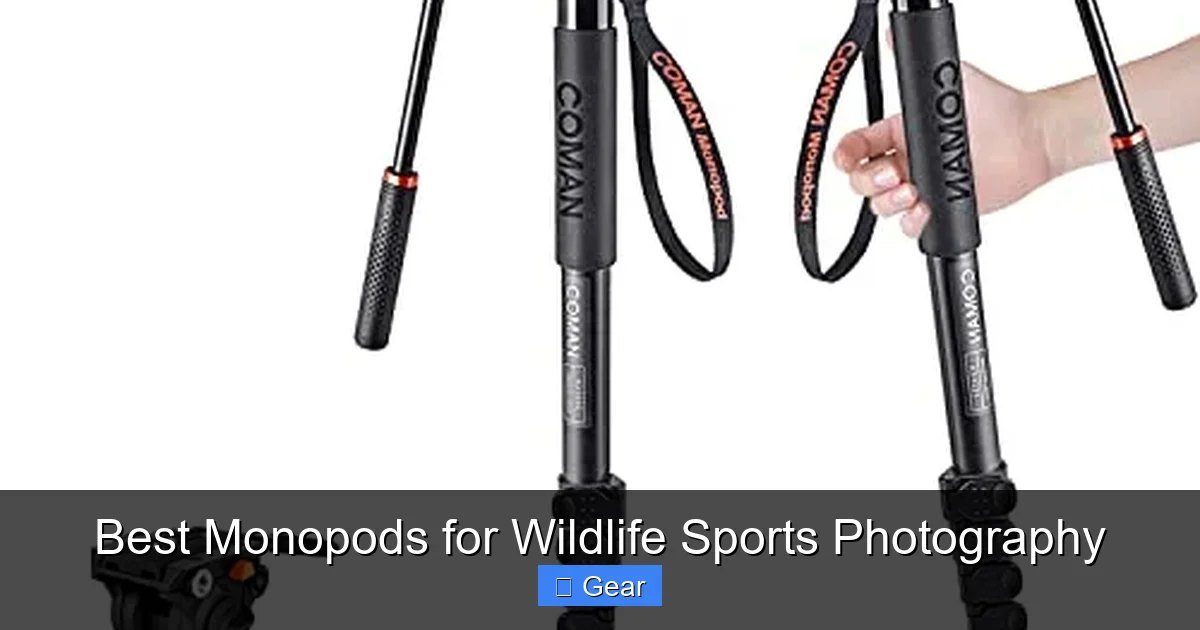
For photographers venturing into the dynamic worlds of wildlife and sports, a monopod is an indispensable tool. It offers a crucial balance of stability and mobility, allowing you to quickly react to fleeting moments while supporting heavy lenses. This article delves into the essential features, top considerations, and practical tips to help you select the best monopods for wildlife sports photography, ensuring sharper images and less fatigue during long shoots.
Stepping into the thrilling, fast-paced world of wildlife and sports photography means constantly being ready for action. Whether you’re tracking a swift predator through the wilderness or capturing the peak action of an athlete, you need gear that keeps up with your demands. The right equipment can make all the difference between a blurry missed moment and a breathtaking, tack-sharp image. And while a tripod offers ultimate stability, its bulk often hinders the agility required for these dynamic genres. This is where the humble, yet incredibly powerful, monopod shines.
Many photographers initially overlook monopods, thinking they’re just a half-measure. However, for those specializing in wildlife and sports, a monopod isn’t just an accessory; it’s often a vital extension of their setup. It provides a sweet spot – significantly more stability than shooting handheld, without the restrictive weight and setup time of a full tripod. Imagine supporting a heavy telephoto lens for hours, ready to snap at a moment’s notice. A monopod transforms this strenuous task into a manageable, even comfortable, experience, allowing you to focus purely on composition and timing.
In this comprehensive guide, we’ll dive deep into what makes the best monopods for wildlife sports photography truly stand out. We’ll explore the critical features to look for, discuss why certain materials and designs are superior, and share practical tips to help you get the most out of your monopod. By the end, you’ll be equipped with the knowledge to choose the perfect monopod that will become your trusted companion in the field, helping you capture those incredible, fleeting moments with confidence and precision.
Key Takeaways
- Monopods Bridge the Gap: For wildlife and sports photography, monopods offer a crucial middle ground between handheld shooting and tripods, providing enhanced stability without sacrificing essential mobility.
- Prioritize Load Capacity: Your monopod must comfortably support the combined weight of your heaviest camera, lens, and head setup to ensure safety and stability. Always check the manufacturer’s specified maximum load.
- Carbon Fiber for Performance: While aluminum is budget-friendly, carbon fiber monopods are significantly lighter and better at dampening vibrations, making them the preferred choice for demanding outdoor conditions and long shoots.
- Consider Locking Mechanisms: Twist locks are generally faster and more compact, while flip locks can be quicker to engage but might be bulkier. Choose based on your personal preference for speed and ease of use in the field.
- Foot Type Matters: Rubber feet provide grip on most surfaces, but a removable spike foot or a versatile swivel base (often with small retractable feet) can offer superior stability on soft ground or when panning.
- A Good Head is Essential: A dedicated tilt head is highly recommended for wildlife and sports photography as it allows for quick vertical adjustments without compromising horizontal stability.
- Master Proper Technique: Even with the best gear, proper stance and technique (like leaning into the monopod) are vital to maximize stability and achieve consistently sharp images.
Quick Answers to Common Questions
Is a monopod really necessary for wildlife and sports photography?
Yes, for serious wildlife and sports photography, a monopod is highly recommended. It provides crucial stability for heavy lenses, reduces photographer fatigue, and allows for faster setup and movement than a tripod.
What’s the most important feature to look for in a monopod?
Load capacity is paramount. Ensure the monopod can safely and stably support the combined weight of your heaviest camera, lens, and head setup.
Should I get a carbon fiber or aluminum monopod?
Carbon fiber is generally preferred for its lighter weight and superior vibration dampening, especially for long hours in the field. Aluminum is a more budget-friendly option, but it’s heavier.
Can I use a ball head on my monopod?
While possible, a dedicated tilt head is generally better for wildlife and sports photography as it allows for quicker, more stable vertical adjustments without compromising horizontal movement.
How do I make my monopod more stable?
Lean into the monopod, pushing its foot firmly into the ground. Use a spike foot on soft surfaces. Keep your body tight, acting as an additional point of contact for enhanced stability.
📑 Table of Contents
Why a Monopod is Your Secret Weapon for Wildlife and Sports
For wildlife photographers tracking elusive subjects or sports photographers following rapid action, a monopod offers distinct advantages that no other support system can match. It’s about finding that perfect balance.
Mobility Meets Stability: The Sweet Spot
Wildlife and sports photography demand quick reactions. Animals move unpredictably, and athletes are constantly in motion. A tripod, while offering ultimate stability, often takes too long to adjust and reposition. Handheld shooting, especially with heavy telephoto lenses, quickly leads to fatigue and camera shake, resulting in soft images. A monopod provides that perfect compromise. You can quickly pivot, move to a new vantage point, and still get crucial support, allowing you to use slower shutter speeds or lower ISOs than you could handheld, resulting in cleaner, sharper images. The ability to quickly relocate and re-aim your monopod for wildlife photography is invaluable.
Reducing Weight and Fatigue
Long telephoto lenses, often necessary for wildlife and sports, are notoriously heavy. Holding a 400mm or 600mm lens steady for extended periods is exhausting. A monopod takes the bulk of this weight off your arms, shoulders, and back. This means you can stay out longer, maintain better posture, and reduce the physical strain, allowing you to concentrate more on your photography and less on your aching muscles. This is a huge benefit when considering monopods for sports photography or long waits in a hide.
Faster Setup and Takedown
Unlike a tripod, which requires careful leveling and leg splaying, a monopod is incredibly quick to deploy and collapse. Extend the leg, lock it, and you’re ready to shoot. This speed is paramount when a photo opportunity presents itself unexpectedly. You can go from carrying your gear to being ready to shoot in mere seconds, a critical advantage in both wildlife and sports photography where moments vanish in a blink. The ease of setting up your monopod for wildlife photography means you’ll miss fewer shots.
Improved Ergonomics and Panning
A monopod allows for a natural shooting stance, keeping your body more upright and less cramped compared to hunching over a handheld setup. When using a monopod for sports photography, especially with subjects moving across the frame, the monopod acts as a pivot point, making smooth horizontal panning much easier and more consistent than trying to pan handheld. This greatly enhances your ability to capture sharp images of subjects in motion.
Key Features to Look for in the Best Monopods
Choosing among the best monopods for wildlife sports photography requires understanding the essential features that contribute to performance, durability, and ease of use.
Material: Carbon Fiber vs. Aluminum
This is perhaps the most significant choice you’ll make.
- Carbon Fiber: The premium choice. Carbon fiber monopods are significantly lighter than their aluminum counterparts, making them much easier to carry during long treks. Crucially, carbon fiber also excels at dampening vibrations, which translates to sharper images, especially with long lenses. While more expensive, the weight savings and vibration reduction are often worth the investment for serious wildlife and sports photographers.
- Aluminum: A more budget-friendly option. Aluminum monopods are sturdy and durable but heavier. If budget is a primary concern and you don’t mind a little extra weight, aluminum can be a good starting point. However, be aware that its vibration dampening properties are inferior to carbon fiber.
Leg Sections and Locking Mechanisms
The number of leg sections affects both collapsed length and maximum height. More sections generally mean a more compact collapsed size but potentially less stability (due to more joints) and more locks to operate.
- Flip Locks: These are lever-style locks that “flip” open or closed to adjust the leg sections. They are generally very quick to operate and provide a visual confirmation that they are locked. However, they can sometimes snag on clothing or gear, and over time, some cheaper flip locks can loosen or break.
- Twist Locks: These require you to twist a collar to loosen or tighten the leg section. They offer a sleeker profile, are less prone to snagging, and often provide a more secure lock. Many photographers find them faster for single-handed operation. However, they can be harder to operate with gloves, and it’s less immediately obvious if they’re fully tightened. The best monopods for wildlife sports photography often feature robust twist locks.
Consider which type you find more intuitive and reliable in varying weather conditions.
Maximum Height and Collapsed Length
Your monopod should extend high enough for comfortable eye-level shooting when fully extended, even on uneven terrain, without needing to bend over. Remember to factor in the height of your camera and lens, and any monopod head you plan to use. Conversely, a good collapsed length is important for portability, especially if you plan to attach it to a backpack or carry-on luggage. Look for a monopod that matches your personal height and portability needs.
Load Capacity: Don’t Compromise
This is non-negotiable. The monopod’s stated maximum load capacity *must* exceed the combined weight of your heaviest camera, lens, and monopod head. Underestimating this can lead to instability, equipment damage, or even injury. Always err on the side of caution. If your setup weighs 8 pounds, look for a monopod with a load capacity of at least 10-12 pounds. The best monopods for wildlife sports photography will have a high load capacity.
Foot Type: Grip and Adaptability
The foot of your monopod is its sole point of contact with the ground, so its design is crucial for stability.
- Rubber Feet: Standard on most monopods, rubber feet provide good grip on hard, flat surfaces like concrete or studio floors.
- Spike Feet: Excellent for soft ground, grass, mud, or ice, as they dig in for extra stability. Some monopods offer interchangeable feet, allowing you to swap between rubber and spikes.
- Swivel/Pivot Bases: Many modern monopods feature a small, multi-directional base with three small retractable feet. These allow the monopod to pivot and lean, providing additional stability and making smoother panning motions possible, almost mimicking a fluid video head. This type of base is particularly beneficial for active shooting where you need to constantly adjust your angle.
Integrated vs. Detachable Head
Some monopods come with a simple head built-in. While convenient, these are often basic. The best monopods for wildlife sports photography usually have a standard 3/8″-16 screw mount, allowing you to attach a separate, higher-quality head that perfectly suits your needs. This modularity offers greater flexibility and performance.
Pairing Your Monopod with the Right Head
Even the best monopods for wildlife sports photography are only as good as the head attached to them. For these genres, the head choice is critical.
Tilt Heads: Your Best Friend
A dedicated monopod tilt head is arguably the best choice for wildlife and sports photography. These heads allow you to quickly adjust your camera’s vertical angle (tilt up and down) without affecting its horizontal stability. They are typically lightweight, strong, and designed for fast operation. Look for one with a sturdy quick-release plate system for fast mounting and dismounting of your camera. A fluid tilt mechanism can also be a bonus for extremely smooth adjustments.
Ball Heads: Less Ideal, But Usable for Lighter Setups
While versatile for other photography types, ball heads are generally less ideal for monopods, especially with heavy telephoto lenses. They allow movement in all directions, which can make it harder to maintain a stable horizontal position when only needing vertical adjustments. However, for lighter camera and lens combinations, a high-quality ball head with independent panning and tension control can work.
Fluid Monopod Bases: Enhanced Panning
Some monopods come with or can be fitted with a fluid base, as mentioned in the “Foot Type” section. These bases provide a small, stable platform with a fluid cartridge that allows for incredibly smooth, almost video-like panning. This is a fantastic feature for tracking moving subjects and can elevate your monopod for sports photography to a new level of smoothness.
Top Monopod Considerations for Different Needs
While I won’t recommend specific brands (as models change and preferences vary), here’s what to look for based on common scenarios in wildlife and sports photography.
The Lightweight Champion: For Trekking and Travel
If you’re often hiking long distances or traveling by air, prioritize minimum weight. This means a carbon fiber construction with 4 or 5 leg sections for a compact collapsed length. Ensure it still meets your load capacity requirements. Look for reliable twist locks for a sleek profile and quick deployment. These are ideal monopods for wildlife photography where portability is key.
The Heavy-Duty Workhorse: For Large Lenses
When you’re regularly wielding massive lenses (like 400mm f/2.8 or 600mm f/4), absolute stability and load capacity are paramount. Focus on robust carbon fiber models with fewer leg sections (e.g., 3-4) for maximum rigidity. These models will have stronger leg diameters and more substantial locking mechanisms. A swivel base with small feet can also add extra support under heavy loads. These are the go-to monopods for sports photography with long glass.
The Versatile All-Rounder: Balancing Performance and Value
For photographers who need a good balance of features without breaking the bank, look for a mid-range carbon fiber monopod or a high-end aluminum one. Prioritize a good load capacity and a comfortable operating height. Consider a model with a detachable foot that allows for swapping between rubber and spike, or one with a basic swivel base. This provides flexibility for various shooting conditions in both wildlife and sports.
Tips for Maximizing Your Monopod’s Potential
Even with the best monopods for wildlife sports photography, technique is everything. Here are some tips to get the most out of your setup.
Proper Stance and Technique
Don’t just rest your camera on the monopod. Lean into it slightly, pushing the monopod’s foot firmly into the ground. This creates a more stable tripod-like stance. Keep your arms tucked in, and use your body as an additional point of contact, perhaps with your left hand gripping the lens barrel and resting on the monopod, or your elbow against your side. Practice this stance to find what feels most stable for you.
Utilize the Foot
If you have a spike foot, use it on soft ground to really dig in for superior stability. On hard surfaces, ensure the rubber foot is flat. If your monopod has a swivel base with mini-feet, spread them slightly and lean into the monopod to engage all three points of contact.
Balance Mobility and Stability
Remember, the monopod’s strength is its balance between these two. Don’t extend it unnecessarily. Use just enough height to comfortably bring the viewfinder to your eye. A shorter monopod is a more stable monopod. When moving, collapse only the lowest section or two to maintain some height but increase portability.
Maintenance is Key
Keep your monopod clean. Dust, dirt, and sand can get into the locking mechanisms and leg sections, causing them to jam or wear out prematurely. Wipe down the legs after each use, especially if you’ve been in sandy or muddy environments. Periodically check and tighten any screws or bolts. Proper care ensures your monopod lasts for years.
Conclusion
The world of wildlife and sports photography is exhilarating, demanding, and incredibly rewarding. To truly excel and capture those fleeting, impactful moments, having the right gear is non-negotiable. Among the array of equipment available, the monopod stands out as a versatile, powerful, and often underestimated tool. It’s the essential link that bridges the gap between the freedom of handheld shooting and the unwavering stability of a tripod.
By understanding the critical features – from the lightweight strength of carbon fiber and robust locking mechanisms to crucial load capacities and adaptable foot types – you can confidently select one of the best monopods for wildlife sports photography. Couple your chosen monopod with the ideal head, such as a responsive tilt head or a fluid base, and you’ll unlock new levels of stability and responsiveness. Remember that technique matters as much as the gear itself. Practice your stance, maintain your equipment, and let your monopod become a natural extension of your photographic vision. Invest wisely, and prepare to capture sharper, more dynamic images with greater ease and enjoyment in your thrilling pursuits.
🎥 Related Video: I Tested the Top Monopods of 2025 – Here’s What You Need to Know
📺 TheTechMag
Check Out The Best Monopods Here! ▻ SIRUI SVM-145: https://geni.us/wXlCtYz ▻ IFOOTAGE Cobra 3 A180F: …
Frequently Asked Questions
What is the main difference between a monopod and a tripod for photography?
A monopod offers a single point of ground contact, providing enhanced stability over handheld shooting while maintaining high mobility for quick adjustments and repositioning. A tripod offers three points of contact, providing maximum stability for static shots, but is much heavier and slower to move and set up, making it less ideal for fast-paced action.
How much load capacity do I really need for my monopod?
You should calculate the total weight of your heaviest camera body, your longest telephoto lens, and the monopod head you plan to use. Then, choose a monopod with a stated load capacity that is at least 20-30% higher than that total weight to ensure optimal safety and performance, especially when considering the best monopods for wildlife sports photography.
Are twist locks or flip locks better for monopods?
Neither is definitively “better”; it often comes down to personal preference. Twist locks are typically more compact and often preferred for their speed and secure grip, while flip locks can be quicker to visually confirm but might snag on gear. Consider what feels most intuitive and reliable for you in the field.
Do I need a special head for my monopod when shooting wildlife or sports?
While some monopods have integrated heads, most photographers prefer to add a dedicated monopod head. A tilt head is highly recommended for wildlife and sports photography as it allows for fast vertical adjustments while keeping your horizontal plane stable, which is crucial for tracking moving subjects efficiently and smoothly.
How do I properly carry my monopod while hiking or moving?
Many monopods come with a wrist strap, which is useful for security. For longer treks, collapse the monopod to its shortest length and attach it to the side of your camera backpack using compression straps. This keeps your hands free and distributes the weight effectively, making your best monopods for wildlife sports photography easy to transport.
Can a monopod help reduce motion blur in my photos?
Absolutely! By providing a stable point of contact, a monopod significantly reduces camera shake, allowing you to use slower shutter speeds than you could handheld. This directly translates to sharper images and helps mitigate motion blur caused by camera movement, especially with long telephoto lenses that exaggerate shake.
