


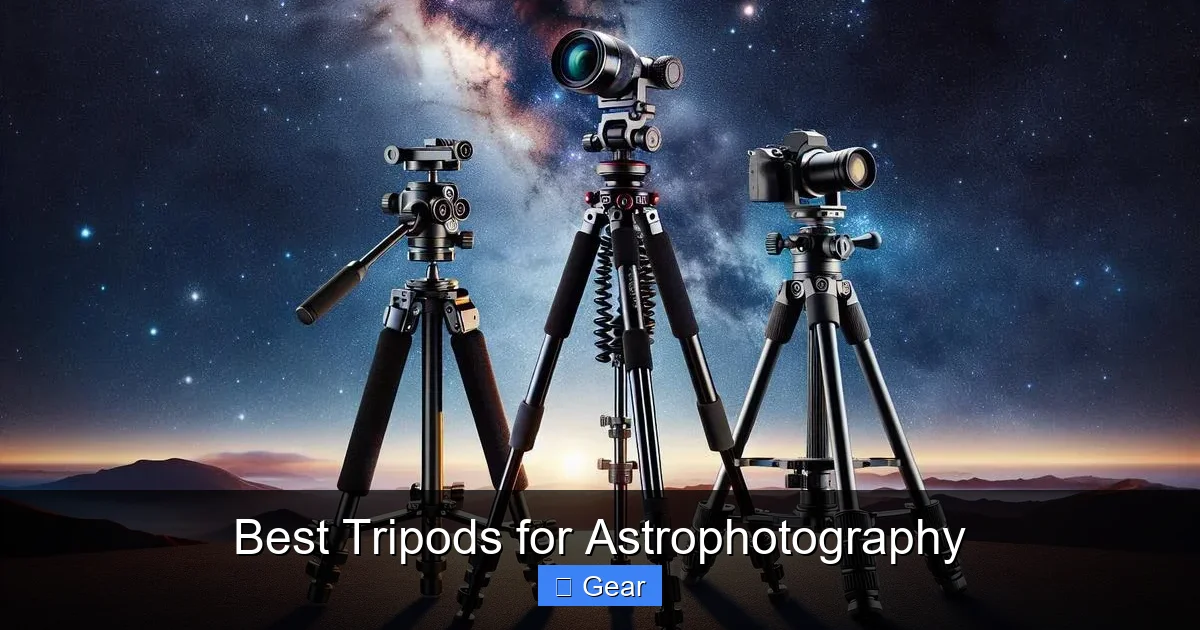
For breathtaking astrophotography, a stable and robust tripod is absolutely essential. It combats vibration, supports heavy gear during long exposures, and ensures pinpoint stars instead of blurry trails. Investing in one of the best tripods for astrophotography is crucial for capturing the universe’s beauty with clarity and precision.
There’s a special kind of magic that happens when you point your camera at the night sky. The swirling galaxies, the glittering star fields, the ethereal glow of nebulae – it’s a profound experience. But capturing that magic isn’t as simple as just pointing and shooting. Astrophotography demands precision, patience, and, most importantly, rock-solid stability. This is where your tripod becomes the unsung hero of your gear bag.
Imagine setting up for a 30-second exposure of the Milky Way, only for a slight breeze or a tiny tremor to introduce blur and star trails into your shot. Frustrating, right? Every astrophotographer knows this pain. The long exposure times required to gather enough light from faint celestial objects mean that even the slightest movement can ruin an image. That’s why choosing one of the best tripods for astrophotography isn’t just an option; it’s an absolute necessity. It’s the stable foundation upon which all your cosmic captures are built.
So, how do you navigate the vast sea of tripods out there to find your perfect partner for stargazing adventures? This comprehensive guide will walk you through everything you need to know. We’ll explore the critical features, discuss different types, and offer practical advice to help you select a tripod that will reliably support your vision, night after night. Get ready to discover what truly makes the best tripods for astrophotography stand out from the crowd.
Key Takeaways
- Stability is Paramount: The single most critical factor for astrophotography tripods is absolute stability to prevent vibrations during long exposures, ensuring sharp stars and clear celestial objects.
- Payload Capacity Matters: Your tripod must comfortably support the combined weight of your camera, lens (or telescope), star tracker, and any accessories. Always choose a tripod with a payload capacity significantly higher than your total gear weight.
- Materials & Build Quality: Carbon fiber tripods offer an excellent balance of strength, vibration dampening, and portability, though aluminum can be a more budget-friendly, albeit heavier, option. Robust construction and quality leg locks are vital.
- Specialized Heads are Key: While basic ball heads can work for wide-field shots, deep-sky astrophotography often necessitates an equatorial mount or star tracker for precise celestial tracking, counteracting Earth’s rotation.
- Minimize Center Column Use: For maximum stability, extend the tripod legs fully and avoid raising the center column, as it’s typically the most prone to vibration. Some of the best tripods for astrophotography lack a center column entirely or offer a removable one.
- Consider Portability: Evaluate your typical shooting locations. If you hike to dark sky sites, a lighter, more compact tripod (like one made from carbon fiber) will be invaluable, without compromising essential stability.
- It’s an Investment: A high-quality tripod is one of the most important investments an astrophotographer can make. It will last for years and directly impact the quality of your images.
Quick Answers to Common Questions
Can I use my regular photography tripod for astrophotography?
You can for very basic, short-exposure wide-field shots, but a dedicated, more robust tripod designed for astrophotography will offer significantly better stability and payload capacity for sharper images, especially with longer exposures or heavier gear.
What’s more important: carbon fiber or aluminum for astrophotography?
Carbon fiber is generally preferred for its excellent vibration dampening and lighter weight, making it great for portability. However, heavy-duty aluminum tripods can also be very stable, though they will be heavier.
How much payload capacity do I really need?
Always aim for a payload capacity that is 1.5 to 2 times greater than the total weight of your camera, lens, and any accessories (like a star tracker). This buffer ensures optimal stability and safety for your equipment.
Is a center column good for astrophotography?
Generally, no. The center column is the least stable part of a tripod and should ideally be kept retracted or removed entirely for astrophotography. Many of the best tripods for astrophotography are designed without one for maximum rigidity.
Do I need a star tracker for astrophotography?
It depends on your goals. For wide-field Milky Way shots with exposures under 30 seconds, a stable regular tripod is fine. For capturing faint deep-sky objects like nebulae and galaxies with longer exposures, a star tracker (equatorial mount) mounted on a sturdy tripod is essential to prevent star trailing.
📑 Table of Contents
- Why a Rock-Solid Foundation is Non-Negotiable for Astrophotography
- Essential Features of the Best Tripods for Astrophotography
- Types of Tripods and Mounts for Stargazers
- Choosing the Right Tripod for Your Astrophotography Needs
- Setup and Usage Tips for Optimal Performance
- The Investment in Quality: What Makes the Best Tripods for Astrophotography Stand Out
- Conclusion: Your Stable Bridge to the Stars
Why a Rock-Solid Foundation is Non-Negotiable for Astrophotography
Before we dive into specific features, let’s understand why a high-quality tripod is so utterly crucial for astrophotography. It’s more than just something to hold your camera; it’s your primary defense against image degradation.
Combating Vibration: The Silent Killer of Sharp Images
Long exposure photography, the bread and butter of astrophotography, is incredibly susceptible to vibration. Think about it: your camera’s shutter might be open for 15, 30, or even several hundred seconds. During that time, any movement – from wind, unsteady ground, heavy footsteps nearby, or even the subtle mirror slap of a DSLR – can cause your stars to smudge from pinpoint dots into unsightly trails. The best tripods for astrophotography are engineered to minimize these vibrations, providing a steady platform that absorbs rather than transmits movement.
Supporting Heavy Gear: More Than Just a Camera
Unlike daytime photography, astrophotography often involves more than just a camera and lens. You might be mounting a heavy full-frame DSLR, a fast, wide-angle prime lens, a star tracker, a small telescope, counterweights, and perhaps even a guide scope. All of this equipment adds up, and your tripod needs to handle that combined weight effortlessly, with plenty of room to spare. A tripod struggling with its load will be inherently unstable, making it unsuitable for astrophotography.
Precision and Repetition: Aligning for Success
For deep-sky objects or tracked exposures, precise polar alignment is vital. A wobbly tripod makes achieving and holding this alignment incredibly difficult, if not impossible. The best tripods for astrophotography allow for fine adjustments without shifting, ensuring that once you’re aligned, you stay aligned for multiple exposures, crucial for stacking images later.
Essential Features of the Best Tripods for Astrophotography
When searching for the ideal tripod, there are specific characteristics that rise above the rest. Prioritizing these will lead you to a tripod that performs exceptionally under the challenging conditions of night sky photography.
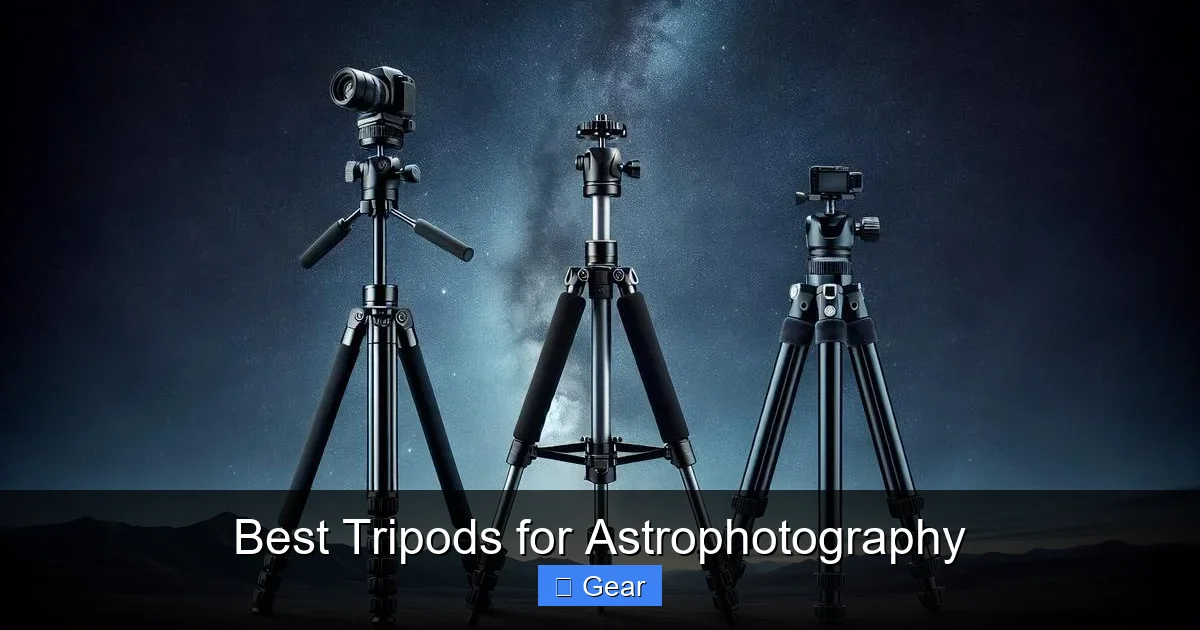
Visual guide about Best Tripods for Astrophotography
Image source: astrophotographyexpert.com
Payload Capacity: Always Overshoot
This is perhaps the most critical specification after overall stability. The payload capacity tells you how much weight the tripod can safely and stably support. As a rule of thumb, always choose a tripod with a payload capacity at least 1.5 to 2 times greater than the total weight of your heaviest anticipated gear setup. If your camera, lens, and star tracker weigh 10 pounds, look for a tripod rated for 15-20 pounds. This buffer ensures maximum stability and prevents strain on the tripod components.
Stability and Materials: Carbon Fiber vs. Aluminum
- Carbon Fiber: Often considered the gold standard for astrophotography. Carbon fiber tripods are lightweight, incredibly strong, and excel at dampening vibrations. This combination makes them ideal for both portability (if you hike to dark skies) and performance. However, they typically come with a higher price tag.
- Aluminum: A more budget-friendly option. Aluminum tripods can be very stable, especially the thicker-legged models. Their main drawback is weight; they are significantly heavier than carbon fiber alternatives. While they dampen vibrations reasonably well, carbon fiber generally has an edge here too.
Regardless of material, look for thick leg sections. Thicker legs are inherently more rigid and less prone to flexing or wobbling.
Height and Leg Locks: Reach for the Stars, Stay Grounded
Consider the maximum height. While you often won’t need to shoot at eye level for astrophotography, having the option to adjust for uneven terrain or to get above obstructions can be useful. More importantly, check the minimum height. Sometimes shooting very low to the ground provides extra stability or allows for interesting foreground compositions.
Leg locks come in two main types:
- Twist Locks: These are generally preferred by astrophotographers because they are quicker to operate, less likely to snag, and offer a very secure lock. Many of the best tripods for astrophotography feature twist locks.
- Flip Locks: While faster for initial setup, some can loosen over time or be less secure than high-quality twist locks, potentially leading to creep or slippage under heavy loads.
Ensure the leg locks are robust, easy to operate even with gloves, and provide a firm, positive lock without any play.
Tripod Head: Your Connection to the Cosmos
The type of head you choose is as important as the tripod legs themselves. For astrophotography, you’ll encounter a few options:
- Ball Head: Excellent for wide-field astrophotography (Milky Way, star trails) where you’re not tracking celestial objects. A high-quality ball head with a large ball diameter and strong locking mechanism is essential. Ensure it has an Arca-Swiss compatible clamp for quick release plates.
- Pan-Tilt Head: Less common for serious astrophotography due to their usually lower payload capacity and less precise adjustments compared to ball heads, but can work for very light setups.
- Equatorial Mount (Star Tracker): This is revolutionary for deep-sky astrophotography. An equatorial mount counteracts Earth’s rotation, allowing your camera to track stars across the sky. This enables much longer exposures without star trails, revealing faint galaxies and nebulae. These mounts attach directly to your tripod and often include their own precise adjustments for polar alignment. Many top-tier astrophotography tripods are designed to serve as a sturdy base for these sophisticated tracking mounts.
Center Column: Use with Caution (or Not at All)
Many tripods come with a center column to extend the height. For astrophotography, however, the center column is often a point of weakness. It’s the least stable part of the tripod and is highly susceptible to vibration. For maximum stability, always keep the center column fully retracted or, ideally, choose a tripod that either doesn’t have one or offers a removable one that you can leave at home. Some specialized astrophotography tripods are designed without a center column for ultimate rigidity.
Portability and Build Quality: Designed for the Dark
If you plan to hike to remote dark-sky locations, the tripod’s folded size and weight become important. Carbon fiber shines here. However, never sacrifice stability for portability. A light tripod that wobbles is useless. Also, consider the overall build quality: are the joints solid? Do the screws feel robust? Will it withstand cold temperatures and potentially rough handling in the dark?
Types of Tripods and Mounts for Stargazers
The “best tripods for astrophotography” can mean different things depending on your specific goals. Here’s a breakdown of common types:
Basic Photographic Tripods (for Wide-Field Astrophotography)
For capturing the Milky Way arching across the sky, star trails, or simple constellation shots, a high-quality, stable photographic tripod with a good ball head is often sufficient. These tripods provide the necessary stability for 15-30 second exposures with wide-angle lenses. Look for models with excellent vibration dampening and strong leg locks. Think robust carbon fiber tripods from reputable brands.
Equatorial Mounts and Star Trackers (for Deep-Sky Astrophotography)
If your aspirations include photographing distant galaxies, nebulae, or getting super-sharp, long-exposure shots of constellations with longer focal lengths, an equatorial mount (often called a “star tracker”) is essential. These devices sit on top of a sturdy tripod and, once accurately polar aligned, rotate your camera at the same rate as the Earth, keeping celestial objects perfectly still in your frame. This allows for exposures of several minutes or even hours (when combined with guiding), revealing incredible detail. The tripod’s role here is to provide an exceptionally stable and level platform for the tracker to do its job. Some of the best tripods for astrophotography in this category are heavy-duty, often without a center column, and designed to minimize flex.
Specialized Tripods for Telescopes and Observatories
For serious amateur astronomers using large telescopes, the tripods become even more substantial. These often resemble pier-style mounts or extremely heavy-duty tripods designed to handle hundreds of pounds of gear. While beyond the scope of typical camera-based astrophotography, it illustrates the extreme end of stability requirements.
Choosing the Right Tripod for Your Astrophotography Needs
Making the right choice involves balancing your gear, your photographic goals, and your budget.
Consider Your Gear: Weight and Size
Before looking at any tripod, gather all the gear you intend to mount on it: camera body, heaviest lens, star tracker, guide scope, etc. Weigh it all. This total weight is your baseline for determining the required payload capacity. A small mirrorless camera and a lightweight prime lens will need a less beefy (but still stable!) tripod than a full-frame DSLR with a heavy telephoto lens and a substantial star tracker.
Your Astrophotography Subject: Wide-Field vs. Deep-Sky
- Wide-Field (Milky Way, Landscapes with Stars): A high-quality, stable photographic tripod with a good ball head is a great starting point. Focus on excellent vibration dampening and payload capacity for your camera/lens.
- Deep-Sky (Galaxies, Nebulae, tracked constellations): You’ll need a tripod that can serve as an unshakeable base for an equatorial mount or star tracker. Prioritize maximum stability, even if it means more weight. Many of the best tripods for astrophotography in this domain are built like tanks.
Your Budget: An Investment, Not an Expense
High-quality tripods are an investment. While tempting to save money here, a cheap, flimsy tripod will quickly become a source of frustration and limit your photographic potential. It’s often better to save a bit longer for a truly capable tripod than to buy a subpar one that you’ll quickly outgrow or, worse, that will ruin your images. Expect to spend a few hundred dollars, and potentially more, for a top-tier astrophotography tripod.
Portability Requirements: Hike or Backyard?
If you’re often trekking miles into the wilderness for truly dark skies, a lighter carbon fiber tripod will be your best friend. If you primarily shoot from your backyard or easily accessible locations, the extra weight of an aluminum tripod might be a tolerable trade-off for cost savings or even greater stability in some heavy-duty models. The best tripods for astrophotography manage to offer both portability and stability, but usually at a premium.
Setup and Usage Tips for Optimal Performance
Even with the best tripods for astrophotography, proper setup and usage can significantly impact your results.
Leveling is Key
Always ensure your tripod is perfectly level, especially if you’re using an equatorial mount. Use a bubble level or the level built into your camera/mount. An unlevel tripod can cause tracking errors and make polar alignment more difficult.
Weighting Your Tripod
Many tripods have a hook on the bottom of the center column. You can hang your camera bag, a bag of rocks, or a dedicated sandbag from this hook. Adding weight lowers the tripod’s center of gravity and dramatically increases its stability, particularly in windy conditions. This is a simple, effective tip for getting the most out of your astrophotography tripod.
Minimizing Vibrations Beyond the Tripod
- Remote Shutter Release: Use a wired or wireless remote shutter release to avoid touching the camera and introducing vibrations when pressing the shutter button.
- Mirror Lock-Up / Electronic First Curtain Shutter (EFCS): If using a DSLR, enable mirror lock-up or EFCS to eliminate the vibration caused by the mirror flipping up. Mirrorless cameras inherently avoid this issue.
- Timer Delay: Set a 2-second timer delay before the shutter fires, allowing any residual vibrations from touching the camera to dissipate.
Extend Legs Fully, Retract Center Column
As mentioned, for maximum stability, extend the thickest leg sections first, keeping the thinner sections retracted if possible. And always, always keep that center column down.
The Investment in Quality: What Makes the Best Tripods for Astrophotography Stand Out
While we haven’t listed specific models (as technology and availability change), the brands that consistently produce the best tripods for astrophotography share common characteristics. They focus on precision engineering, high-quality materials, and designs that prioritize stability above all else.
Manufacturers like Gitzo, Really Right Stuff (RRS), and certain Manfrotto heavy-duty series are often cited for their exceptional build quality, robust carbon fiber legs, and impressive payload capacities. When it comes to equatorial mounts and their supporting tripods, brands such as iOptron and Sky-Watcher offer systems designed from the ground up for stellar tracking. These companies understand that for astrophotography, there’s no room for compromise on stability. Their products feature strong, precise leg locks that don’t creep, durable metal components, and thoughtful designs that minimize flex and vibration.
When you invest in one of these top-tier options, you’re not just buying a piece of gear; you’re buying peace of mind. You’re getting a tool that will reliably perform under challenging conditions, allowing you to focus on composition and capture, rather than battling with a shaky setup. The initial cost may be higher, but the longevity, reliability, and superior image quality will quickly prove its worth.
Conclusion: Your Stable Bridge to the Stars
Astrophotography is a journey into the cosmic unknown, a pursuit that demands both technical skill and the right equipment. Among all the gear you might accumulate, your tripod stands as one of the most fundamental and impactful choices. A truly stable, well-built tripod isn’t just an accessory; it’s the stable bridge connecting your camera to the vast, breathtaking canvas of the night sky.
By understanding the critical importance of payload capacity, superior materials like carbon fiber, effective vibration dampening, and the right head for your specific goals (be it a robust ball head or a precise equatorial mount), you’re well-equipped to find the best tripods for astrophotography that meet your needs. Don’t underestimate this vital piece of kit; invest wisely, set up carefully, and you’ll be rewarded with stunning, crystal-clear images of the universe. Happy stargazing!
🎥 Related Video: Ultimate Astrophotography Travel Tripod Review – Packs Small, Shoots Big
📺 Nightscape Odyssey
Looking for the best compact travel tripod for astrophotography? The iFootage TC3B Gazelle carbon fiber tripod is perfect for astro …
Frequently Asked Questions
What is the most crucial factor when choosing a tripod for astrophotography?
The most crucial factor is stability. Astrophotography relies on long exposures, so any vibration will result in blurry stars or trails. A heavy-duty, robust tripod with strong leg locks and excellent vibration dampening is paramount to capture sharp, clear images of celestial objects.
How does a tripod’s material (carbon fiber vs. aluminum) affect astrophotography?
Carbon fiber tripods are lighter and offer superior vibration dampening, making them excellent for portability and performance. Aluminum tripods are more affordable but heavier, and while they can be very stable, carbon fiber typically has an edge in vibration absorption, which is critical for astrophotography.
Should I prioritize maximum height or minimum height in an astrophotography tripod?
For astrophotography, minimum height can often be more beneficial than maximum height. Shooting low to the ground can enhance stability, especially on uneven terrain. While having decent maximum height for versatility is good, prioritize a tripod that can get low and remain incredibly steady.
Why do astrophotographers often advise against using the center column?
The center column is typically the weakest point of a tripod, most prone to flex and vibration. Extending it reduces overall stability significantly, which can ruin long-exposure astrophotography shots. For the sharpest results, it’s best to keep it fully retracted or choose a tripod designed without one.
Can a good tripod improve my star tracker’s performance?
Absolutely. A star tracker can only perform as well as the stable platform it sits upon. An unstable or wobbly tripod will introduce tracking errors, even with the most precise equatorial mount. Investing in one of the best tripods for astrophotography is crucial to maximize your star tracker’s accuracy and performance.
What common mistakes should I avoid when setting up my tripod for astrophotography?
Avoid rushing the setup, ensure the tripod is perfectly level, and always double-check that all leg locks and the tripod head are securely tightened. Don’t extend the center column, and if possible, hang weight from the tripod hook to enhance stability further, especially in breezy conditions.
