


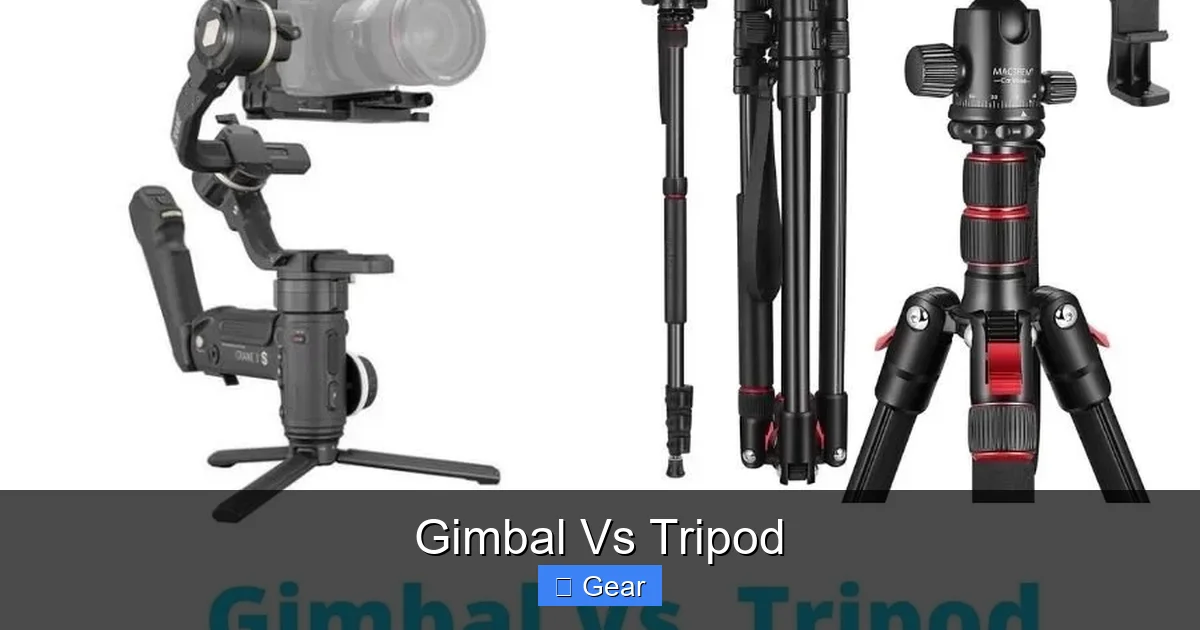
Choosing between a gimbal vs tripod can drastically impact your footage and photos. While a tripod offers unparalleled static stability for crisp, still shots, long exposures, and precise framing, a gimbal excels at dynamic stabilization, creating smooth, cinematic motion while you move. Understanding their distinct roles is key to elevating your visual storytelling, whether you need rock-solid stillness or fluid, professional-looking movement.
Gimbal Vs Tripod: Mastering Stability and Motion for Your Shots
Ever found yourself gazing at breathtaking professional footage, wondering how they achieve such incredible smoothness or pinpoint sharpness? The secret often lies not just in the camera, but in the tools used to stabilize it. Two of the most fundamental yet distinct pieces of gear in a photographer’s or videographer’s arsenal are the gimbal and the tripod. But understanding when to use each, and indeed, why you might need both, is crucial for unlocking your creative potential.
The “gimbal vs tripod” debate isn’t about which one is inherently better; it’s about understanding their unique strengths and applications. Each tool serves a specific purpose, designed to combat different types of unwanted camera movement. One is a master of absolute stillness, grounding your camera in place, while the other is a wizard of fluid motion, making your camera float through space. Let’s dive deep into the world of these essential camera supports and discover how to make the right choice for your next project.
Imagine trying to capture a stunning night sky without a tripod – impossible. Or envision a vlogger running through a city street with a clunky tripod, rather than a smooth, handheld gimbal – disastrous. These examples highlight the core distinction. By the end of this article, you’ll have a crystal-clear understanding of the differences, advantages, and ideal use cases for both gimbals and tripods, empowering you to choose the perfect tool for every shot you envision.
Key Takeaways
- Fundamental Difference: A tripod provides static, unmoving stability for still shots, while a gimbal offers dynamic stabilization for smooth, flowing camera movement.
- Tripods for Stillness: Use tripods for landscapes, long exposures, studio portraits, interviews, time-lapses, and any situation where a perfectly steady, unmoving camera is essential.
- Gimbals for Motion: Gimbals are ideal for vlogging, tracking shots, cinematic sequences, event coverage, and any scenario requiring fluid camera movement without shakes or jitters.
- Stability vs. Portability: Tripods often offer superior rock-solid stability but can be cumbersome for quick repositioning. Gimbals prioritize mobility and smooth transitions, though some compact models may have weight limitations.
- Power Requirements: Gimbals are electronic devices that require batteries and charging, adding another layer of preparation, whereas tripods are purely mechanical.
- Learning Curve: While setting up a tripod is generally straightforward, mastering a gimbal requires practice to achieve truly cinematic results and understand its various modes.
- Complementary Tools: Often, the best approach involves owning and utilizing both; they are not mutually exclusive but rather complementary tools that enhance different aspects of your filmmaking or photography.
Quick Answers to Common Questions
Can I put my camera on a gimbal and then mount the gimbal on a tripod?
Yes, many gimbals come with a 1/4″-20 or 3/8″-16 screw mount on the bottom, allowing you to attach them to a tripod for specific static shots or to set up complex movements from a fixed point without holding the gimbal.
Are gimbals only for video, or can photographers use them?
While gimbals are primarily designed for video to achieve smooth motion, photographers might use them for unique applications like “hyperlapse” photography (stabilized time-lapse while moving) or for capturing stable bursts of action, though their main benefit is for motion footage.
What’s harder to learn: using a tripod or a gimbal?
Generally, a tripod is much easier to learn as it’s mechanical and straightforward. A gimbal has a steeper learning curve due to balancing requirements, understanding different modes, and practicing fluid camera movements.
Do I still need image stabilization in my lens or camera if I use a gimbal?
Yes, in-camera or in-lens image stabilization (IS/IBIS/OIS) can still be beneficial, even with a gimbal. It can help iron out very subtle micro-jitters that the gimbal might miss, especially at the edges of the gimbal’s operational limits, leading to even smoother results.
Is a monopod a good alternative to a tripod or gimbal?
A monopod offers a middle ground, providing more stability than handheld shooting and more mobility than a tripod. It’s great for supporting heavy lenses or in crowded spaces, but it cannot provide the absolute stillness of a tripod or the dynamic smoothness of a gimbal.
📑 Table of Contents
- Understanding the Unwavering Stability of a Tripod
- Embracing Fluid Motion with a Gimbal
- When to Reach for Your Tripod: Ideal Scenarios
- When to Grab Your Gimbal: Dynamic Applications
- Key Differences: Stability vs. Motion – Gimbal Vs Tripod
- Making the Right Choice: Factors to Consider
- Conclusion: The Best Tool for the Job
Understanding the Unwavering Stability of a Tripod
The tripod is perhaps the oldest and most fundamental camera support device, a true workhorse in the world of photography and videography. At its core, a tripod is a three-legged stand designed to hold a camera steady and motionless. Its primary goal is to eliminate any camera shake, providing a stable platform for your gear.
What Makes a Tripod a Tripod?
A typical tripod consists of three extendable legs, a center column, and a head to which the camera attaches. The legs can be adjusted independently to accommodate uneven terrain, and the center column provides additional height. The head is where the magic of precise positioning happens, allowing you to pan, tilt, and even rotate your camera to frame your shot perfectly.
The Indispensable Advantages of a Tripod
When it comes to rock-solid stillness, a tripod has no rival. Here’s why it’s a must-have:
- Ultimate Stability: This is the tripod’s superpower. It eliminates all camera shake, ensuring your images are razor-sharp, even in challenging conditions.
- Long Exposures: Essential for capturing stunning nightscapes, light trails, silky smooth waterfalls, or any scene where you need to keep the shutter open for seconds or even minutes.
- Precise Framing: Once set, your camera remains locked in position, allowing for meticulous composition. This is invaluable for architectural photography, product shots, or perfectly aligned multiple exposures.
- Time-Lapses: A tripod is non-negotiable for time-lapse photography, ensuring consistent framing over extended periods.
- HDR and Focus Stacking: For techniques requiring multiple identical shots at different exposures or focus points, a tripod guarantees perfect alignment.
- Self-Portraits/Group Shots: Need to be in the picture yourself? A tripod and a remote shutter release are your best friends.
- Low Light Photography: In dim conditions, you often need slower shutter speeds, which a tripod makes possible without introducing blur.
- Heavy Gear Support: Many professional tripods can comfortably support heavy camera bodies, large lenses, and even video rigs, taking the strain off your arms.
When a Tripod Might Not Be Your First Choice
While invaluable, tripods do have their limitations, especially when considering gimbal vs tripod for dynamic shooting:
- Lack of Mobility: Tripods are designed for static shots. Moving the camera smoothly while shooting is difficult, if not impossible, without jarring movements.
- Setup Time: Setting up and leveling a tripod can take time, which might be a disadvantage in fast-paced shooting environments.
- Portability: While many travel tripods are compact, professional-grade tripods can be bulky and heavy, making them less ideal for run-and-gun shooting.
- Limited Angles: Achieving very low or very high, sweeping shots can be cumbersome or require specialized tripods.
Embracing Fluid Motion with a Gimbal
In contrast to the static stability of a tripod, a gimbal is all about dynamic, fluid motion. It’s an electronic device designed to stabilize a camera across one, two, or typically three axes, counteracting unwanted shakes and bumps in real-time. Think of it as giving your camera the ability to float, even as you walk, run, or move it around.
The Mechanics of a Gimbal
Modern gimbals, often referred to as electronic camera stabilizers, use brushless motors and sophisticated sensors to detect and correct camera movement. When you tilt, pan, or roll the gimbal, the motors instantly adjust to keep your camera perfectly level and smooth. This results in incredibly cinematic and professional-looking footage that would be impossible to achieve handheld.
The Transformative Benefits of a Gimbal
When comparing gimbal vs tripod for moving shots, the gimbal shines:
Visual guide about Gimbal Vs Tripod
Image source: leofotovietnam.com
- Cinematic Smoothness: This is the primary reason to use a gimbal. It allows you to create tracking shots, dolly shots, and crane-like movements with just your hands, eliminating jarring shakes.
- Dynamic Storytelling: A gimbal enables you to follow subjects, move through environments, and create engaging visual narratives that draw the viewer into the scene.
- Professional Aesthetics: Footage shot on a gimbal immediately looks more polished and high-end, elevating the perceived quality of your work.
- Ease of Movement: Compared to a Steadicam rig (its much larger, heavier, and more complex predecessor), modern gimbals are relatively lightweight and easy to operate, especially for solo shooters.
- Versatility: Many gimbals offer various modes, such as follow mode (camera follows your pan/tilt), lock mode (camera stays fixed on a point), and FPV mode (mimics drone-like movements), expanding your creative options.
- Vlogging and Event Coverage: For content creators on the go or videographers covering dynamic events like weddings or sports, a gimbal is a game-changer for capturing stable, engaging footage while moving around.
The Considerations When Using a Gimbal
While powerful, gimbals also come with their own set of challenges:
- Battery Life: Being electronic, gimbals require power. Batteries need to be charged, and they can run out during a shoot, potentially disrupting your workflow.
- Setup and Balancing: A gimbal must be carefully balanced with your camera and lens combination before use. This can be a tedious process, especially for beginners or when switching lenses frequently.
- Weight and Fatigue: While smaller than traditional stabilizers, holding a camera and gimbal for extended periods can still lead to arm fatigue.
- Learning Curve: Mastering a gimbal takes practice. Achieving truly fluid and intentional movements requires skill and familiarity with its controls and modes.
- Cost: Quality gimbals can be a significant investment, especially for models capable of supporting heavier professional cameras.
- Limited Static Use: While some gimbals have built-in mini-tripods, they are not designed for the same level of static stability as a dedicated tripod. Their motors are always working to stabilize, which isn’t necessary for truly still shots.
When to Reach for Your Tripod: Ideal Scenarios
Understanding the “gimbal vs tripod” choice often comes down to the specific shot you’re trying to achieve. Here are the times when a tripod is your unequivocal champion:
Detailed Landscapes and Astrophotography
To capture the vastness of a landscape or the subtle beauty of the night sky, you need long exposures. A tripod keeps your camera absolutely still, preventing blur even with shutter speeds of several seconds or minutes.
Pin-Sharp Product and Macro Photography
When every detail counts, like in product photography for e-commerce or intricate macro shots, a tripod ensures maximum sharpness. It also allows you to precisely compose and repeat shots with consistent framing.
Studio Portraits and Interviews
For studio work or interviews, where subjects are often stationary, a tripod provides a stable base for consistent framing and eye lines. It frees your hands to interact with the subject or adjust lighting.
Time-Lapse Photography
Creating a compelling time-lapse requires your camera to remain in the exact same position for hours, even days. A tripod is the only tool that can deliver this unwavering consistency.
Long Exposure Waterfalls and Light Painting
If you want to create that dreamy, silky smooth effect on flowing water or use light painting techniques, a tripod is non-negotiable. It allows the sensor to gather enough light over time without any movement.
When to Grab Your Gimbal: Dynamic Applications
Now, let’s explore scenarios where a gimbal outshines a tripod, focusing on movement and dynamism in the “gimbal vs tripod” comparison.
Cinematic Tracking and Dolly Shots
Want to smoothly follow a subject as they walk, or create a graceful push-in or pull-out shot? A gimbal allows you to achieve these complex movements with a professional, cinematic feel, mimicking expensive dolly and track setups.
Event Videography (Weddings, Sports, Concerts)
In fast-paced environments where you need to move quickly to follow the action, a gimbal is invaluable. It enables you to capture stable footage while moving through crowds, following a bride down the aisle, or tracking an athlete.
Vlogging and On-the-Go Content Creation
For vloggers who talk to the camera while walking, a gimbal is a game-changer. It keeps the footage stable and watchable, making your content much more professional than shaky handheld video.
Establishing Shots and Environmental Reveals
When you want to reveal an environment or establish a scene with a flowing camera movement – perhaps a smooth pan around a room or a graceful walk-through shot – a gimbal delivers the polished results needed.
Creative Camera Movements and POVs
Gimbals open up a world of creative possibilities for dynamic camera angles, such as low-angle tracking shots, high-angle sweeps, or even simulating drone-like movements (within safe limits).
Key Differences: Stability vs. Motion – Gimbal Vs Tripod
The core of the “gimbal vs tripod” discussion boils down to their fundamental purpose. One masters stillness, the other masters motion. Let’s break down the key differentiators:
Purpose
- Tripod: To provide a fixed, absolutely stable platform for static shots.
- Gimbal: To provide dynamic, smooth stabilization for moving shots.
Mechanism
- Tripod: Mechanical, relies on three points of contact with the ground and gravity.
- Gimbal: Electronic, uses motors and sensors to counteract movement in real-time.
Power Requirements
- Tripod: None, it’s purely mechanical.
- Gimbal: Requires charged batteries to operate.
Primary Output
- Tripod: Still photographs, time-lapses, perfectly steady video for interviews.
- Gimbal: Smooth, cinematic video footage.
Portability and Setup
- Tripod: Can be bulky, but generally quick to set up for static shots. Once set, it stays.
- Gimbal: Often more compact for movement, but requires careful balancing and battery management before use.
Learning Curve
- Tripod: Relatively simple to use; main skills involve leveling and composition.
- Gimbal: Requires practice to balance properly and master various operating modes and fluid movements.
Cost
- Tripod: Can range from very affordable for basic models to expensive for professional, sturdy ones.
- Gimbal: Generally starts at a higher price point for entry-level models and increases significantly for professional-grade units.
Making the Right Choice: Factors to Consider
Deciding between a gimbal vs tripod, or indeed, which models to buy, involves weighing several factors relevant to your specific needs.
Your Primary Shooting Style
Are you predominantly a landscape photographer, an architectural shooter, or someone who loves macro photography? Then a high-quality tripod should be your priority. If you’re a videographer, vlogger, or event shooter focused on dynamic storytelling, a gimbal will be more transformative for your work.
Type of Content You Create
Are you creating documentaries with interviews, or action-packed short films? Do you shoot static product photos, or active lifestyle videos? The type of content directly dictates the primary tool you’ll need.
Budget
Gimbals, especially those for heavier cameras, can be a significant investment. Tripods also vary widely in price based on material (aluminum vs carbon fiber), head type, and weight capacity. Determine what you can realistically spend.
Weight and Portability Needs
If you’re often hiking or traveling light, a compact travel tripod or a lightweight gimbal might be more suitable. If you mostly shoot in a studio or don’t mind carrying heavier gear for maximum stability, you have more options.
Camera System Compatibility
Ensure any gimbal you consider can safely and effectively balance your specific camera and lens combination. Likewise, check that your chosen tripod head can comfortably support the weight of your heaviest setup.
The Power of Both: Complementary Tools
It’s important to stress that gimbals and tripods are not mutually exclusive. In fact, many professional content creators own both and use them interchangeably, or even together! A tripod can be used to set up static establishing shots or interviews, while a gimbal takes over for tracking shots or moving sequences within the same project. They are complementary tools that enhance different aspects of your visual storytelling, each excelling in its specific domain.
Conclusion: The Best Tool for the Job
In the enduring “gimbal vs tripod” discussion, there’s no single winner. Instead, there’s a clear understanding of what each tool does best. A tripod is your steadfast partner for absolute stillness, guaranteeing sharp, precisely framed images and video when motion is the enemy. It’s the foundation for capturing breathtaking long exposures, intricate details, and perfectly composed shots.
A gimbal, on the other hand, is your dynamic ally for fluid motion, transforming shaky handheld footage into professional, cinematic sequences. It’s the key to engaging tracking shots, immersive vlogging, and dynamic event coverage that draws your audience into the heart of the action.
Ultimately, the choice depends on your creative vision. For many serious creators, the ideal setup includes both. By understanding their individual strengths and weaknesses, you can confidently select the right gear for any situation, taking your photography and videography to new, more stable, or wonderfully dynamic heights. So, next time you plan a shoot, ask yourself: do I need unwavering stillness, or graceful, flowing movement? Your answer will guide you to the perfect tool.
🎥 Related Video: Gimbal or Handheld? Which is the best? #cinematic
📺 Gyverr+
Frequently Asked Questions
What is the main difference between a gimbal and a tripod?
A gimbal is an electronic stabilizer designed for smooth, dynamic camera movements while the operator is in motion, perfect for video. A tripod is a static, three-legged stand that provides unmoving stability for still photos, long exposures, and video where the camera remains stationary.
Which is better for filmmaking, a gimbal or a tripod?
Both are essential for filmmaking. A tripod is crucial for static shots, interviews, and precise framing. A gimbal is indispensable for achieving cinematic tracking shots, smooth pans, and dynamic sequences where the camera needs to move fluidly with the action.
Can a gimbal replace a tripod for all uses?
No, a gimbal cannot entirely replace a tripod. While some gimbals have small legs to stand on, they don’t offer the same level of static stability required for long exposures, architectural photography, or perfectly still interviews where absolutely no camera movement is desired.
Is it worth buying both a gimbal and a tripod?
For serious photographers and videographers, investing in both a gimbal and a tripod is highly recommended. They are complementary tools that excel in different situations, allowing you to capture both perfectly still images and dynamic, smooth video, expanding your creative capabilities significantly.
What should I consider when buying a tripod?
When buying a tripod, consider its weight capacity (to support your heaviest gear), height, folded size for portability, material (aluminum for affordability, carbon fiber for lightness), and the type of head (ball head for flexibility, pan-tilt head for precision, fluid head for video).
What should I look for when purchasing a gimbal?
When buying a gimbal, prioritize compatibility with your camera and lens setup (weight limit), battery life, available shooting modes, ease of balancing, and overall build quality. Features like an integrated display, follow focus capabilities, and app control can also enhance the user experience.
